
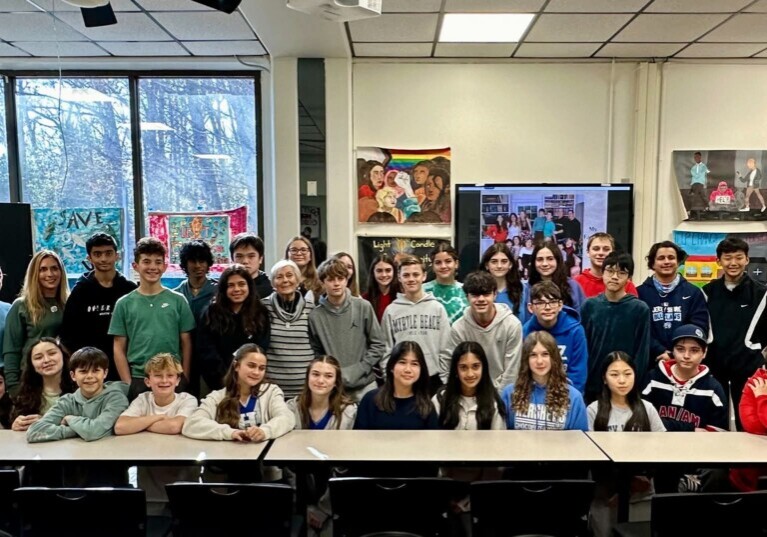
Making meaning of the mandates in NJ classrooms
By Francine Pfeffer and Stacy Schiller
Implementing New Jersey’s multiple curricular mandates presents opportunities for educators to integrate curricula representative of our diverse student population and empower learners to reflect on today’s world. Yet it also presents challenges. One particular roadblock is the lack of content knowledge of the mandates, whether Amistad (education about African Americans), Asian American and Pacific Islander Education, the contributions of LGBTQIA+ and people with disabilities, diversity and inclusion education, or Holocaust and genocide education.
The NJEA Consortium promotes the inclusion of all voices in our schools and communities and has developed a macro curriculum to help educators implement the mandates. Additional content and pedagogical opportunities are available through the Consortium’s Learning Management System, with student-centered performance tasks and educator learning plans to be offered in the future.
According to the Consortium website, “This initiative goes beyond curriculum; it is about building strong community relationships, providing professional development and fostering conversations that will make New Jersey’s diverse population see themselves in our schools’ teachings.”
The Consortium also partners with community organizations that help educators address the inclusive curriculum mandates.
Like the Consortium, Chhange, the Center for Holocaust, Human Rights and Genocide Education, offers programming and educational experiences to help educators teach difficult topics with empathy and respect.
Centering the human experience
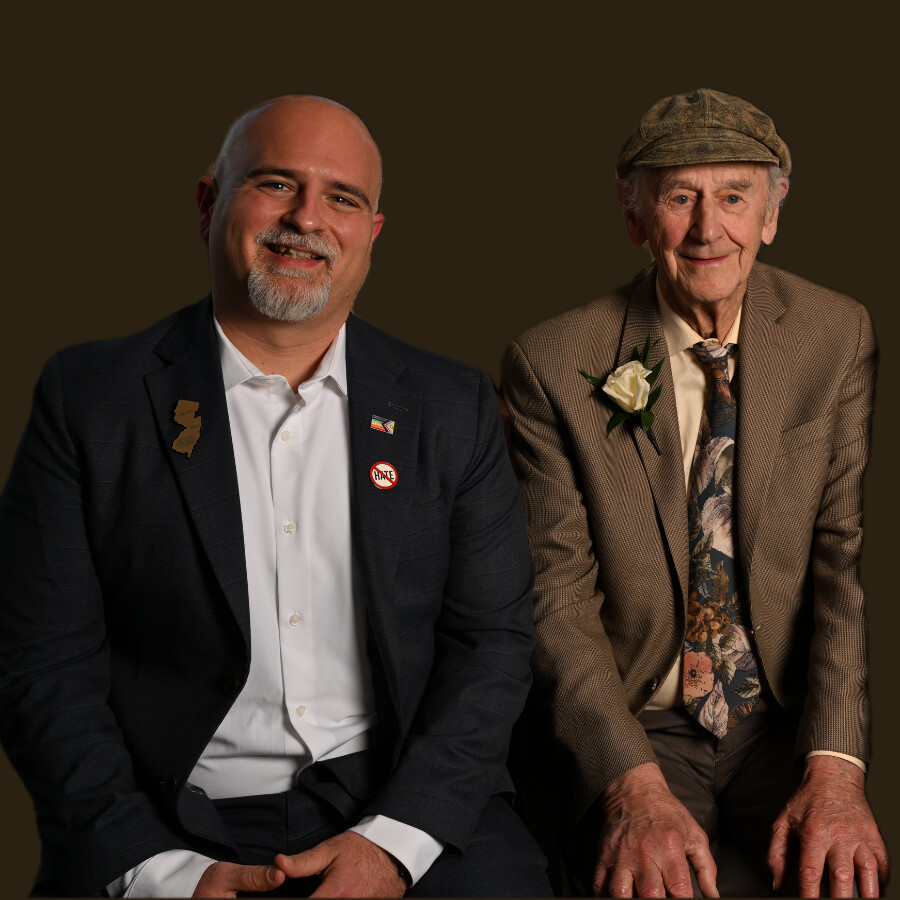
Chhange was established in 1979 as an outgrowth of a local Lunch and Learn Series developed by NJEA members Professors Seymour “Sy“ Siegler, Ed.D. and Jack Needle. Chhange started as the Center for Holocaust Studies and over time, expanded its mission beyond the Holocaust. Part of the campus of Brookdale Community College in Lincroft, Chhange serves staff and students at the college, as well as schools throughout Monmouth and Ocean counties and elsewhere in the state.
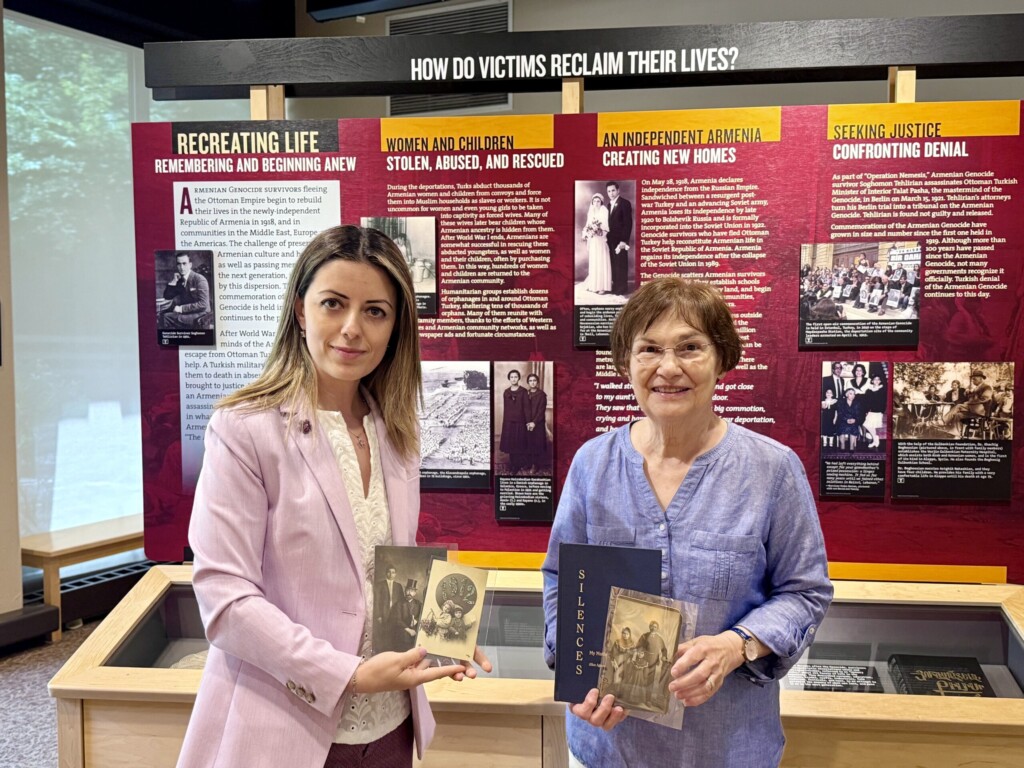
At the center of Chhange’s educational work is its genocide exhibit, Journeys Beyond Genocide: the Human Experience. The exhibit takes its title from its focus on the human story of three genocides: the Armenian Genocide, the Holocaust and the 1994 Genocide Against the Tutsi in Rwanda.
Open since 2018, students, educators, the Brookdale community and the general public have the opportunity to engage with this exhibit to learn about the conditions, human choices and consequences of each of these catastrophic events. A vast collection of artifacts donated to Chhange by the Armenian, Holocaust and Rwandan survivors and family members fuels the exhibit’s narrative. Despite the uniqueness of each genocide, the focus on the commonalities across genocides makes the exhibit powerful.
“We look into these three chapters of history in conjunction with one another rather than in isolation,” says Dr. Asya Darbinyan, executive director at Chhange. “Chhange educates, inspires and empowers individuals to stand up to injustice.”
All visitors to the exhibit, students and community members alike, are asked to apply the lessons learned to today as they become upstanders. Chhange’s additional offerings include professional development, docent-led tours of the exhibit, survivor speakers and survivor suitcases, genocide commemoration events, an annual colloquium, a student art project and much more.
Professional development with a larger purpose
Marissa Crimoli, a Holmdel Township middle and high school educator, participates in almost all Chhange’s offerings. As an ELA-certified teacher with a master’s in Holocaust and Genocide Studies from Kean University, Crimoli credits Chhange with impacting her teaching. She highlights the uniqueness and consistency of the professional development offerings, which allow her to continue refining her lessons, and she can give evidence of concrete professional learning she has incorporated into her classroom,
“The way they structure conversations and the dialogue that is infused between the participants and the presenters provides a really strong, authentic framework for how to organize, facilitate and guide students through a lot of really difficult conversations without ever shying away from the topic,” Crimoli says.
Crimoli traces her excitement about teaching this heavy topic to Chhange’s “constant infusion of energy and information” and its partnerships with organizations such as the New Jersey Council of Holocaust Educators and the United States Holocaust Memorial Museum.
Joe Nappi, a Monmouth Regional High School social studies teacher and New Jersey’s 2023-24 State Teacher of the Year, says that Chhange was one of the local resources he used to build his Holocaust and Genocide elective. After his first workshop, he returned to the classroom and immediately applied his learning to his U.S. History II course, which he says is a consistent experience from Chhange’s PD offerings. That was only the beginning.
Encouragement from Chhange staff led Nappi to become a U.S Holocaust Memorial Museum Fellow and eventually participate in writing lessons for Ken Burns’ The “U.S. and the Holocaust” documentary. While not all teachers who work with Chhange will follow such a path, Nappi encourages the connection.
“If teachers are willing to seek that stuff out, Chhange is very supportive and will help you every step of the way as you try to advance your teaching,” Nappi says.
Chhange also offers an opportunity to tailor professional development and programming for individual schools or districts. Its Building Bridges initiative helps schools create welcoming, inclusive communities, particularly in schools with diverse socioeconomic communities. It can be a proactive way to establish a school culture focused on mutual respect by working through challenging conversations while giving students the opportunity to explore their own beliefs about topics that arise in New Jersey’s curricular mandates. The program empowers students to create a school—and even a world—that strives to eliminate hatred and prejudice.
Survivors as living history
One constant offering for many educators is Chhange’s Survivors Speakers Bureau. Programs such as Lunch with a Survivor help make the Holocaust personal. Crimoli intentionally schedules different survivors and docents for each visit, many of whom are second generation—the children of genocide survivors. Several of their parents’ stories are part of the exhibit.
Meeting these survivors and docents provides unique perspectives and connections to Crimoli’s students, giving them shared, but individual, experiences and preparing them for authentic dialogues later in the classroom. Nappi notes that local connections help students to recognize that these stories aren’t so far away and that real people in the community are impacted by these histories.
Survivor stories are meaningful not only for students but for educators as well. Both Crimoli and Nappi recall that the story of Eva Wiener, the youngest passenger on the SS St. Louis—the ship denied entry into Cuba and the United States and forced to return to Europe—was one of the first local survivor connections they incorporated into the classroom.
Nappi notes that his connection with Manny Lindenbaum has been a huge influence on his teaching. Before they met, Manny was almost a mythical figure. He is a Holocaust survivor who escaped Nazi Germany on the Kindertransport, which brought children from Germany to Great Britain between 1938 and 1940.
As they met and forged a relationship, Lindenbaum helped Nappi return to his passion for service learning. Their conversations, and particularly Lindenbaum’s question, “What are you doing to help others?” convinced Nappi that studying the Holocaust doesn’t have to be purely a scholarly endeavor.
Nappi created a class that is academically challenging while also asking students how their learning applies to the world. His “Be the Change” project helps students connect lessons from the Holocaust to their own lives. Hearing directly from survivors has left a lasting impression on Crimoli as well.
“I can read about the Kindertransport, and have, from many sources,” Crimoli says. “But learning about Manny’s experiences just takes this invisible thread that makes everything weave together like a cohesive blanket.”
Both educators agree that as opportunities to hear directly from Holocaust survivors, Chhange does an excellent job of keeping the stories alive through generational storytelling.
“Chhange encourages second- and third-generation descendants of genocide survivors to come forward, help us promote Holocaust and genocide education and awareness, and be the voice for those who cannot speak anymore,” Dr. Darbinyan shares.
Chhange also works directly with several survivors of the 1994 genocide against the Tutsi in Rwanda, who often offer their unique voices and experiences to the annual commemorations for Genocide Awareness Month and other programs. Many of these past programs—including those from scholars and survivors, covering topics such as the history of human rights, LGBTQIA+ experiences in the Holocaust and racism and Reconstruction—are available on Chhange’s YouTube channel, ChhangeBCC. (Visit youtube.com/@ChhangeBCC.)
Inquiry and discovery
Opportunities for student engagement and discussion abound through Chhange. If educators can’t bring in a Holocaust survivor, Chhange offers Holocaust Survivor Curriculum Suitcases for educators to borrow. The suitcases include a personal narrative of the survivor presented in a family scrapbook, along with a video of the survivor sharing moments of their experiences. They also contain personal photographs, archival items and memorabilia, as well as a historical timeline and lesson plan.
Crimoli shares that the artifacts in the suitcases and the exhibit give students something tangible to remember. While the docents are excellent in helping students engage with this challenging material, Crimoli worked directly with Chhange to personalize the experience for her students, who have strong backgrounds on the genocide when they arrive at the exhibit. These unique experiences, which include student presentations, give students independence in their learning.
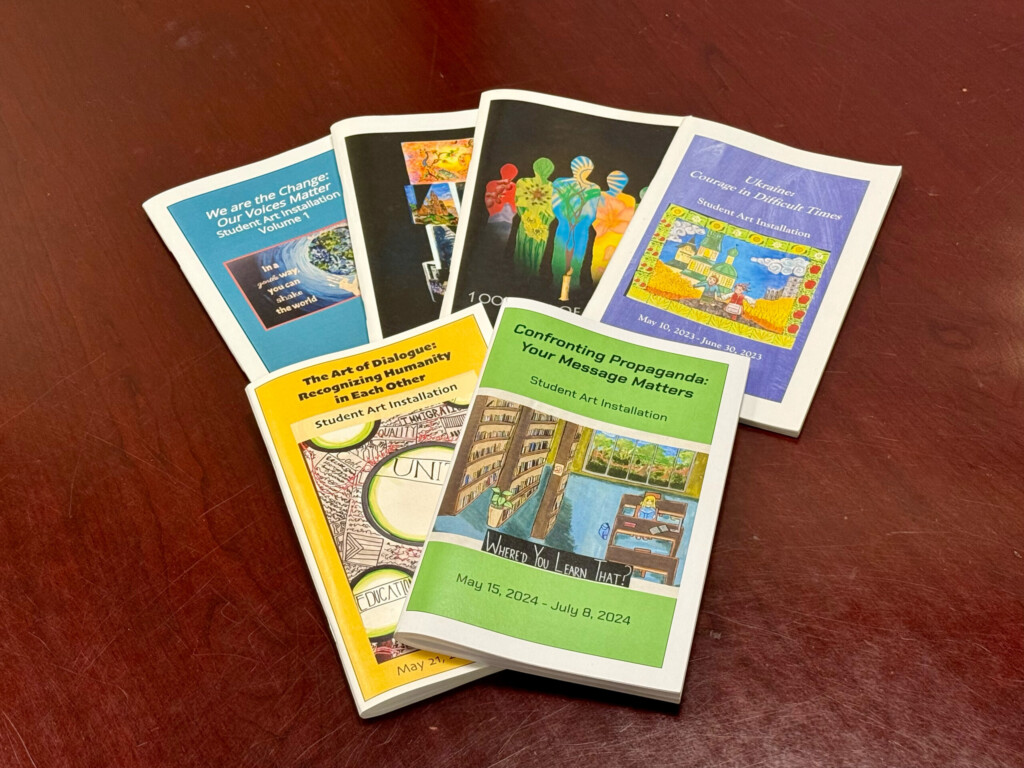
Another Chhange offering which also allows an opportunity for student autonomy is the annual Student Art Installation. Each year students can create artwork around a theme related to the year’s colloquium. Importantly, these themes allow educators to engage with the curricular mandates. Past themes have focused not only on genocide, but on empowering students to find their voice, address hate, confront propaganda and act as “historians of ourselves” as they shared their pandemic experiences. Each theme gives students and teachers the opportunity to explore history and current events through the lenses of diversity and inclusion.
Chhange prepares educators at a workshop by providing lesson plans, digital materials and other resources. Crimoli engages students with the art project through an after-school club.
“The art project gives students the opportunity to have their thoughts and feelings heard by an authentic audience,” Crimoli says. “These are people who are interested in what they have to say, and are listening with deeper interest.”
The art project also gives students a chance to engage with peers about topics they might not normally broach outside the classroom. Crimoli found their discussions to be rich and was impressed by how determined they were for their art to represent their conversations and learning.
Nappi’s students have participated in the art workshop for at least 10 years.
“It’s a great opportunity for interdisciplinary connection,” Nappi says.
He has worked with art and graphic arts teachers to support student work. They get excited about seeing their work with their families and other students at the art installation reception held at the Center for the Visual Arts on Brookdale’s campus. He loves that it’s a way to reach the students who may be less engaged with literature or historical readings.
A collaborative community
Aside from professional development, Crimoli wishes more educators knew about the extensive library and resources available. As she was planning a unit on the Armenian genocide, Chhange’s library of Armenian genocide books, as well as discussions with Chhange’s director, Dr. Darbinyan, provided guidance, information and an opportunity to explore new pedagogical approaches, such as different ways to engage with the Armenian section of the exhibit. Dr. Darbinyan has also provided a Content Scholar talk about the Armenian genocide and intersectionality for the consortium.
Nappi has been able to take what he has learned outside of Chhange and share with the community of educators, presenting his lessons from Ken Burns’ documentary, among other topics from additional partnerships. As his journey as a Holocaust educator began with Chhange, these presentations feel like full-circle moments for him.
“Any success I have had in the classroom, I want to see other teachers have that same success with their students,” Nappi says.
Yet he still returns to participate in programs and workshops.
“Every time I go to one of these workshops at Chhange, I leave invigorated,” Nappi says. “I have ideas of things that I’m going to take back and turnkey directly into my classroom. I encourage teachers to take advantage of Chhange’s programming because Chhange is really a phenomenal resource right in our backyard.”
Francine Pfeffer is an associate director in the Politics and Policy Office of the NJEA Government Relations Division. She can be reached at fpfeffer@njea.org.
Stacy Schiller has nearly 30 years of experience teaching Holocaust, social justice and U.S. history. She serves as a Design Team Ambassador with the NJEA Consortium and teaches at Raritan High School, Hazlet.
Explore Chhange program
Chhange’s programs, whether in person or virtual, are open to all. For additional programming, visit chhange.org. Middle and high school teachers who would like to schedule a visit to the exhibit, borrow a suitcase or to hear from a survivor can contact Chhange at contact@chhange.org or 732-224-1889. A field trip itinerary to Chhange, created by the Consortium, will be published later this year.