

By Aaron McClendon
Mikie Sherrill will enter the governor’s office on Jan. 20 with a new Legislature and a bold agenda to transform the way New Jersey operates, promising significant reforms to make our government more efficient and accountable to taxpayers. So what can NJEA expect from an incoming Sherrill administration?
Expanding access to education
As governor, Mikie Sherrill will focus her education agenda on expanding quality and opportunity for New Jerseyans while minimizing costs for the taxpayer. Sherrill praises New Jersey’s schools as the best in the nation but is deeply concerned with systemic inequities that undermine student success. Major priorities for her administration include providing all school meals at no cost to students, modernizing and stabilizing the school funding formula, and making affordable early childhood education available to all New Jerseyans. She is also deeply committed to combatting school segregation and will likely work to expand access to regional magnet schools and reinvest in the Interdistrict Public School Choice Program. Sherrill also shares NJEA’s support for vocational education and can be an important ally in our efforts to ensure our students enjoy access to vocational-technical learning.
Pensions: A promise of security
While on the campaign trail, Sherrill repeatedly committed to fully funding public employee pensions during her administration. During one of her campaign debates, she criticized the state for inconsistently funding the pension system and pledged to keep it solvent and secure for the public servants who paid into it. Sherrill also voiced her concerns about pension injustice, calling the policy that forces educators out of their pensions for two-year breaks in service an unfair practice that punishes new parents. In 2025, NJEA successfully advocated for legislation that protected members in TPAF from losing their pension benefits after a two-year break-in-service, and with Sherrill’s support we have the potential to successfully do the same for our members in PERS.
Standing firm against school vouchers
School voucher programs divert public funds into scholarships for private schools. Like NJEA, Sherrill is staunch in her opposition to the use of public dollars for private education and instead calls on New Jersey to make stronger investments in our public schools. Her stance on this issue will become important, as Congress just created the nation’s first federal school voucher program, which allows individuals to donate to state-approved Scholarship Granting Organizations (SGOs) in exchange for a federal tax write-off.
SGOs can fund a variety of education-related expenses, but the program is intended to benefit private schools and eventually inspire state-funded voucher programs. While the ultimate cost of this program will depend on how many states and individuals participate, experts estimate that the program could cost the U.S. up to $51 billion in tax credits that could otherwise support public education. The good news is that governors must voluntarily opt-in to the program before SGOs can operate in their state, so Sherrill’s continued opposition will be critical in reducing the damage this program will have on our federal budget. It’s an opportunity to make her a great partner in NJEA’s efforts to prevent a similar program from draining public funds in New Jersey.
Recovering from the pandemic
Sherrill’s take on the crises impacting education in New Jersey is also influenced by her experience as a parent of school-aged children during the pandemic. Sherrill has a deep respect for educators for providing critical social engagement for kids during the outbreak of COVID-19 and made combatting pandemic learning loss one of her top priorities while she was in Congress. We can expect Sherrill to champion the expansion of high-impact tutoring and mental health services to help schools confront the long-lasting impacts of the pandemic on student outcomes and behavioral health. To address the teacher shortage, Sherrill will likely promote high impact tutoring and the student teaching stipend, a top issue for aspiring educators, as channels to help recruit new educators into the field.
Confronting the youth mental health crisis
During a gubernatorial debate, Sherrill named the youth mental health crisis as one of her top concerns as a parent. In her New Jersey Online Safety Agenda, Sherrill outlined her plan to tackle the growing impact of social media, addiction and technology on the behavioral health of New Jersey’s children. Sherrill proposed enacting an Age Appropriate Design Code that would ban online ads targeting children and restrict the collection of their personal data. She also supports banning the use of cellphones during class time, creating a Social Media Addiction Observatory to study best practices for promoting online safety for children and using curriculum and public awareness campaigns to instruct parents and children on the responsible use of technology, social media and artificial intelligence tools.
As Sherrill and Caldwell step into leadership, New Jersey’s educators and families face a moment of real possibility. With bold commitments to equity, accountability and investment in public education, the new administration signals a partnership that can reshape the state’s schools and strengthen the teaching profession.
For NJEA members, this is not just a change in leadership, it is an opportunity to work alongside allies who value educators as the cornerstone of New Jersey’s future. The months ahead will test how vision translates into action, but the promise of collaboration offers hope for lasting progress.
Aaron McClendon is an associate director in the Office of Politics and Policy in the Government Relations Division. He can be reached at amcclendon@njea.org.
Meet Lieutenant Governor-elect Dale Caldwell
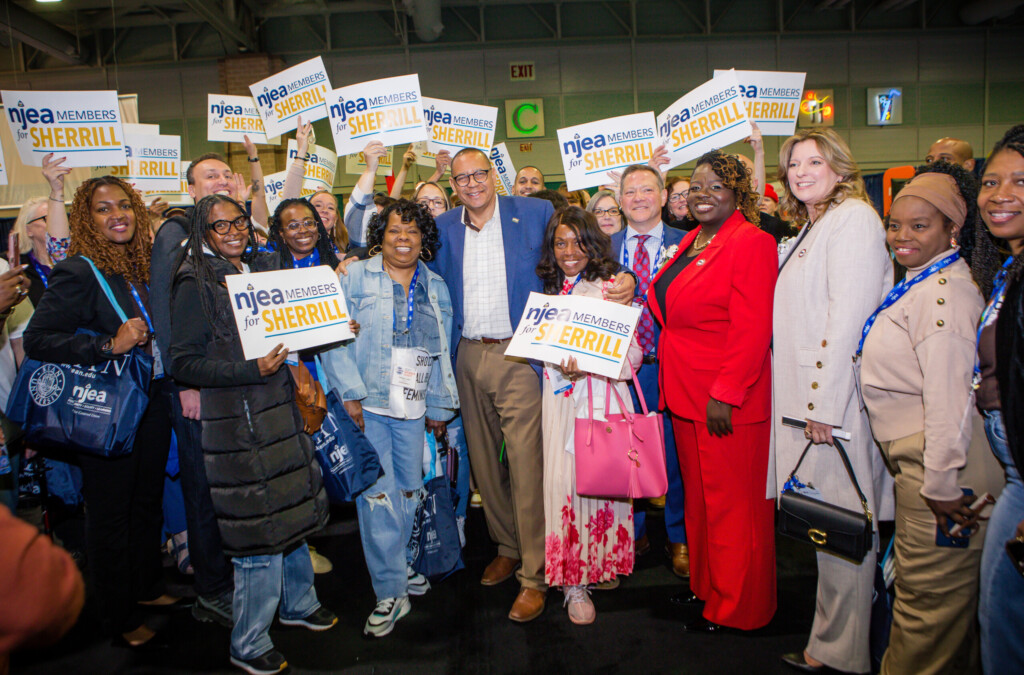
Lieutenant Governor-elect Dale Caldwell is no stranger to education, or public service. The son of a teacher and a civil rights activist, the Boston native is a graduate of Princeton University, earned his MBA from Wharton and his doctorate in education administration from Seton Hall. Caldwell is walking into the State House with a strong background in public leadership and education in New Jersey. Before running with Mikie Sherrill, Caldwell was the President of Centenary University, served on the New Brunswick Board of Education for 26 years and was a member of the Educational Services Commission of New Jersey, where he administered shared services agreements for school districts in Central Jersey.
As New Jersey’s next lieutenant governor, Dale Caldwell is the second-highest ranking official in the state and will serve as acting governor in the event that Gov. Sherrill is unable to perform her duties. The lieutenant governor is required to lead a major state agency, so Caldwell also serves as Sherrill’s secretary of state. In this role, Caldwell oversees some of the most critical government operations for New Jersey, including our elections, small business initiatives and programs supporting economic tourism, civic engagement and the arts.
Since winning office, Caldwell has been enthusiastically engaging with NJEA. In addition to rallying with members at our Government Relations Booth during the NJEA Convention, he also met with President Steve Beatty and NJEA’s county and local presidents at the All Presidents’ Meeting. While addressing our members, Caldwell reiterated Sherrill’s commitment to educators and unions and spoke about their shared priorities of make testing more efficient, devoting more funding for our students and reforming our education to better align with New Jersey’s workforce needs.
Caldwell reaffirmed his belief in the power of educators in changing young people’s lives for the better and expressed a special interest in partnering with teachers in economically challenged communities to connect younger New Jerseyans with the education they need to enter the workforce with competitive skills.