By Kathryn Coulibaly
The Ocean County Vocational Technical School (OCVTS) Culinary Arts shared time Career and Technical Education (CTE) program has built a reputation as one of the most immersive and career-ready programs in the state. With its unique blend of classroom instruction, hands-on training and community service, the program not only prepares students for careers in the food industry but also instills in them a sense of responsibility and pride. At the heart of this mission is the annual Feed the Need campaign, a tradition that brings together students, staff and community partners to provide thousands of Thanksgiving meals to families across Ocean County.
A shared academy experience
The culinary program at OCVTS is structured as a shared academy, meaning students split their time between their home high schools and the vocational campus. Juniors and seniors from across Ocean County attend either morning or afternoon sessions, spending half their day immersed in culinary education. Sophomores are given a preview of the program, and if accepted, they begin their two-year journey in their junior year.
This design allows students to experience the best of both worlds: the academic and extracurricular opportunities of their home schools, and the specialized, career-focused training of the vocational program. It also fosters a diverse community of learners, as students from different towns and backgrounds come together around a shared passion for food.
Steven Glassoff, a culinary arts instructor at OCVTS and an alumnus of the program, is proud of the education students receive.
“What makes our program unique is that it’s real,” Glassoff says. “We’re like a culinary college in the experiences we’re able to provide students.”
A rotational curriculum
The program’s curriculum is carefully structured to give students a comprehensive foundation in the culinary arts. Juniors rotate through three distinct areas:
- Dining room service: One marking period is spent learning the art of hospitality, from setting tables to serving guests.
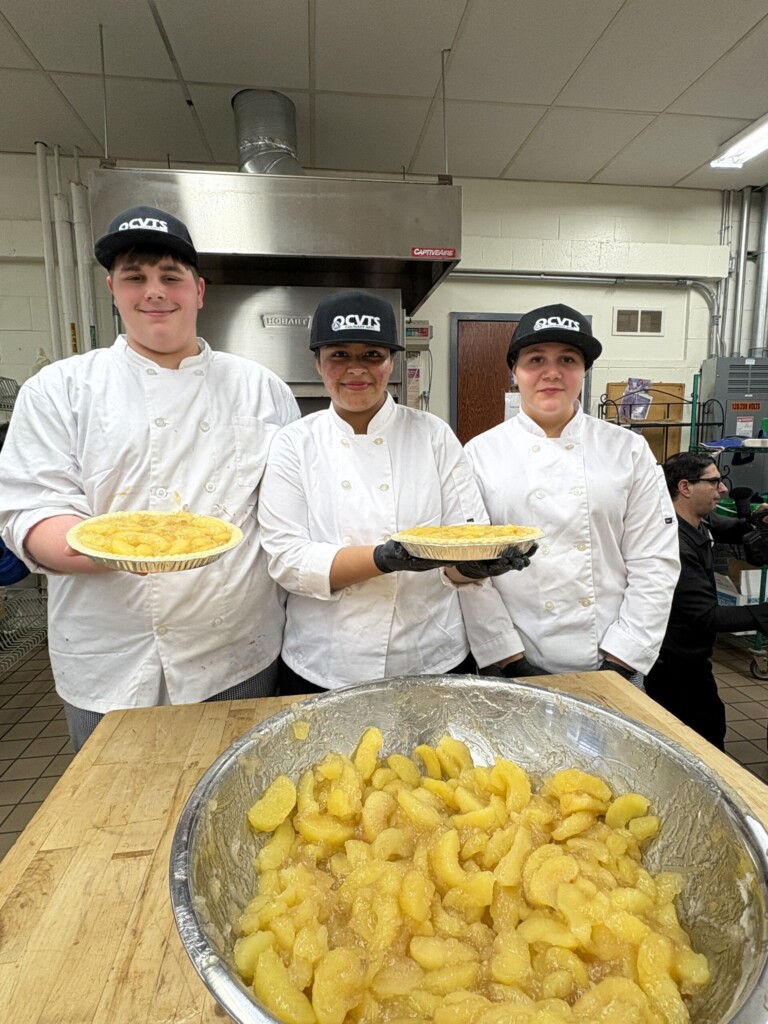
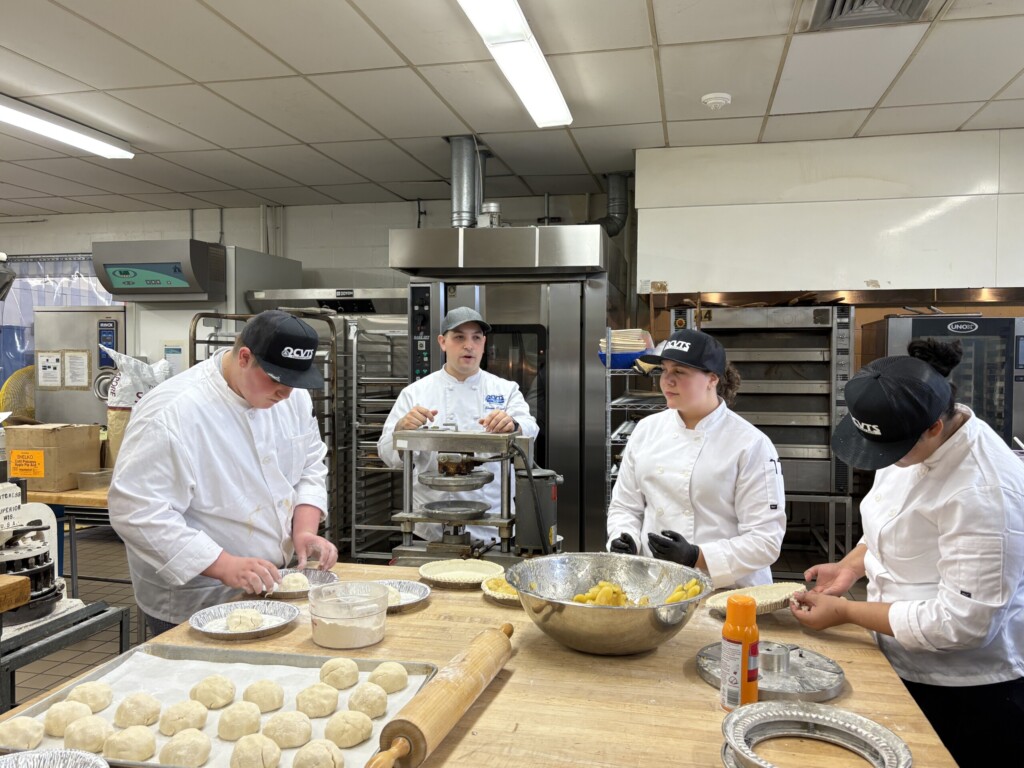
- Bake shop: Another marking period is dedicated to baking, where students master breads, pastries and desserts.
- Hot foods/kitchen: Two marking periods focus on cooking techniques, knife skills and food preparation.
By senior year, students spend most of their time in the hot foods kitchen, with additional exposure to baking. This rotation ensures that every student graduates with a well-rounded skill set, capable of handling multiple roles in a professional kitchen.
Real-world experience: bakery and restaurant
What sets OCVTS apart is its commitment to replicating the real-world culinary industry. The school operates both a bakery and a restaurant, Touch of Class, which are open to the public three days a week. Products made in class are sold in the bakery, giving students direct experience in production, sales and customer service. The restaurant rotates its menu weekly based on what students are learning—whether it’s meat butchery, fish filleting, or plated desserts.
Students quickly learn the importance of consistency and quality. For example, bakery students tasked with producing plated desserts for the restaurant must ensure that all 50 plates look identical, just as they would in a professional setting. This emphasis on precision builds confidence and instills a sense of ownership in their work.

Industry-ready training
The program’s instructors are seasoned professionals, many of whom are graduates of OCVTS themselves. With backgrounds ranging from the Culinary Institute of America to Atlantic Cape Community College, they bring industry expertise directly into the classroom. Their goal is to prepare students not only for college but also for immediate employment. Graduates often start as line cooks and quickly advance to sous chef positions thanks to the rigorous training they receive.
“We’re preparing the students to be able to walk into a restaurant kitchen or a bakery and know what they need to do,” Glassoff says.
Students are also required to earn ServSafe certifications. Juniors complete the food handler certification, while seniors tackle the more advanced food manager certification. These credentials, valid for five years, are highly valued by employers and health departments alike, giving students a competitive edge in the job market.
Tradition and innovation
The program balances tradition with innovation. Baking fundamentals—such as ingredient identification, creaming methods and lamination for croissant—are taught alongside modern techniques like using programmable Unox ovens, edible printers and combi ovens that can steam, bake and air fry. Students also explore gluten-free and vegan baking, learning how to adapt recipes for dietary restrictions.
Technology plays a growing role in the classroom. Students create instructional videos, practice demonstrations on camera and engage with platforms like TikTok and Instagram, reflecting the way modern chefs build their reputations. By blending timeless skills with contemporary trends, OCVTS ensures its graduates are prepared for the evolving culinary landscape.
A culture of professionalism
From day one, students are expected to act like professionals. They wear full chef uniforms—checkered pants, non-slip shoes, jackets and chef toques—and are held to high standards of sanitation and presentation. Instructors emphasize that showing up in a dirty uniform would be unacceptable in the industry, and the same applies in class. This culture of professionalism teaches students accountability and prepares them for the expectations of employers.
“We’re not just teaching students recipes,” Glassoff says. “We’re teaching them to be problem-solvers.”
Competitions and achievements
OCVTS students regularly participate in SkillsUSA competitions, where they showcase their talents at regional, state and national levels. Events range from baking and culinary challenges to demonstrations of trade skills. These competitions not only test technical ability but also build confidence and camaraderie. Over the years, OCVTS students have earned top placements, continuing a tradition of excellence established by instructors like Chef Dennis Melia, a beloved figure who helped shape the program and whose legacy continues to inspire.
Feed the Need: serving the community
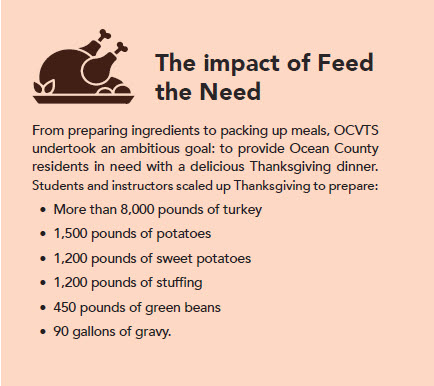
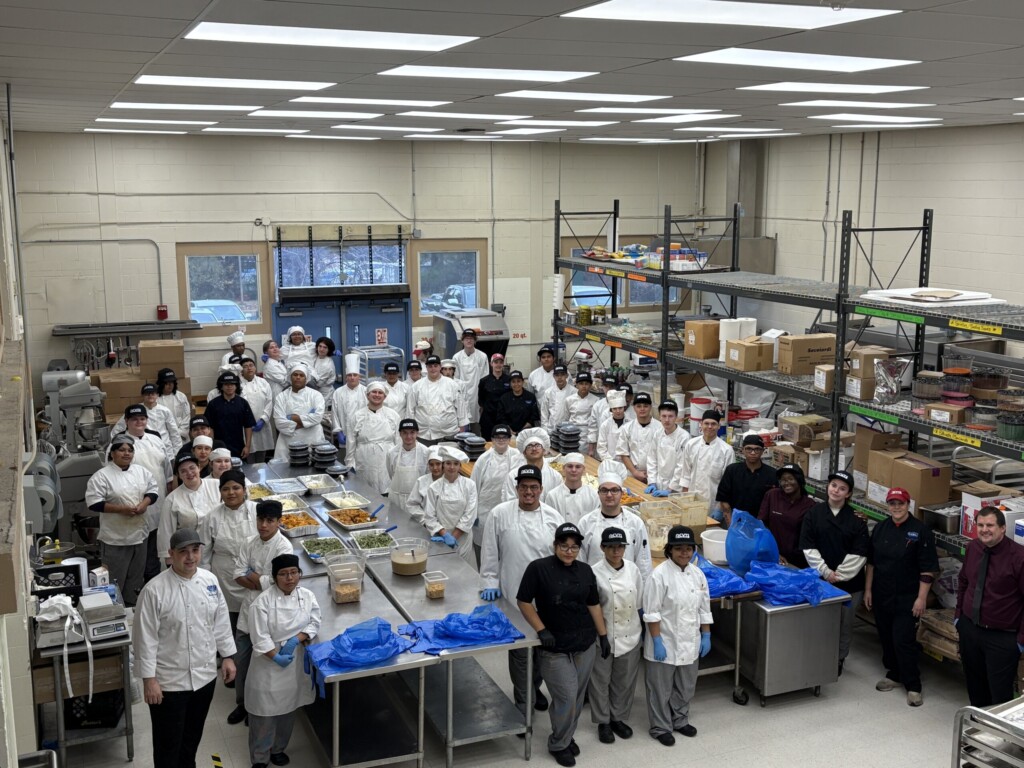
Perhaps the most impactful aspect of the program is its annual Feed the Need campaign. Each year, the culinary program prepares approximately 4,000 complete turkey dinners for families in Ocean County. The effort is a massive undertaking, with each class responsible for a different dish—sweet potatoes, stuffing, green bean casserole, or roasting turkeys. The meals are then boxed and distributed through local agencies in partnership with Fulfill, the local food bank; Seeds of Service; the Community Medical Center and the OCVTS Foundation.
Feed the Need is more than just a service project; it is a lesson in empathy and community engagement. Many students have never volunteered before, and the experience of cooking for thousands of people instills a deep sense of pride. Knowing that their work directly supports families in need makes the long hours worthwhile. Importantly, all meals stay within Ocean County, reinforcing the program’s commitment to serving its local community.
Thanksgiving traditions
In addition to Feed the Need, the bakery runs a popular Thanksgiving pie sale. Students develop a menu of five to seven pies, take orders for two weeks and fulfill them just before the holiday. This event not only raises funds but also gives students practical experience in production planning, customer service and time management.
Full-circle journeys
For many instructors, teaching at OCVTS is a full-circle experience. Several were once students in the program themselves, and now they have returned to guide the next generation. Chef Kevin Musto is considered the godfather of the progam. He has encouraged several graduates to come back and work at OCVTS, including Glassoff and Chef Taylor Baluski. Their stories illustrate the transformative power of vocational education. Glassoff recalls growing up in Toms River, struggling in traditional classrooms, ultimately finding his passion through cooking. After working in restaurants and advancing to sous chef, he returned to OCVTS as a teacher, eager to give students the same opportunities he once received.
This cycle of mentorship and growth is central to the program’s identity. Teachers model lifelong learning, reminding students that even seasoned professionals must continue to grow and adapt. As Glassoff puts it, “If I stop learning, I’ll stop being an effective teacher.”
Preparing for the future
Graduates of OCVTS pursue diverse paths. Some continue their education, earning bachelor’s degrees in food science or applied science. Others enter the workforce directly, finding jobs in restaurants, hotels, cruise ships and catering companies. The program’s emphasis on real-world skills ensures that students are ready for both college and career, equipped with the confidence and professionalism to succeed.
The OCVTS Culinary Arts Academy is more than a training ground—it is a community hub where students learn, grow and give back. Through its bakery, restaurant, competitions and Feed the Need campaign, the program offers a holistic education that blends skill development with social responsibility. Students graduate not only as capable cooks and bakers but also as compassionate individuals ready to make a difference.
“We are incredibly proud of the Culinary Arts Program at OCVTS,” says Lynn Sauer, principal of the Brick campus. “With unparalleled instruction, remarkable creativity and an impressive level of production, this program stands out as truly exceptional. For students passionate about the culinary field, OCVTS is the place to be.”
In Brick, the ovens at OCVTS are always warm, the classrooms are always buzzing and the lessons extend far beyond recipes. Here, culinary education is about preparing meals, preparing futures and preparing students to serve both their industry and their community.
Kathryn Coulibaly is an associate director in the Communications Division. She can be reached at kcoulibaly@njea.org.