
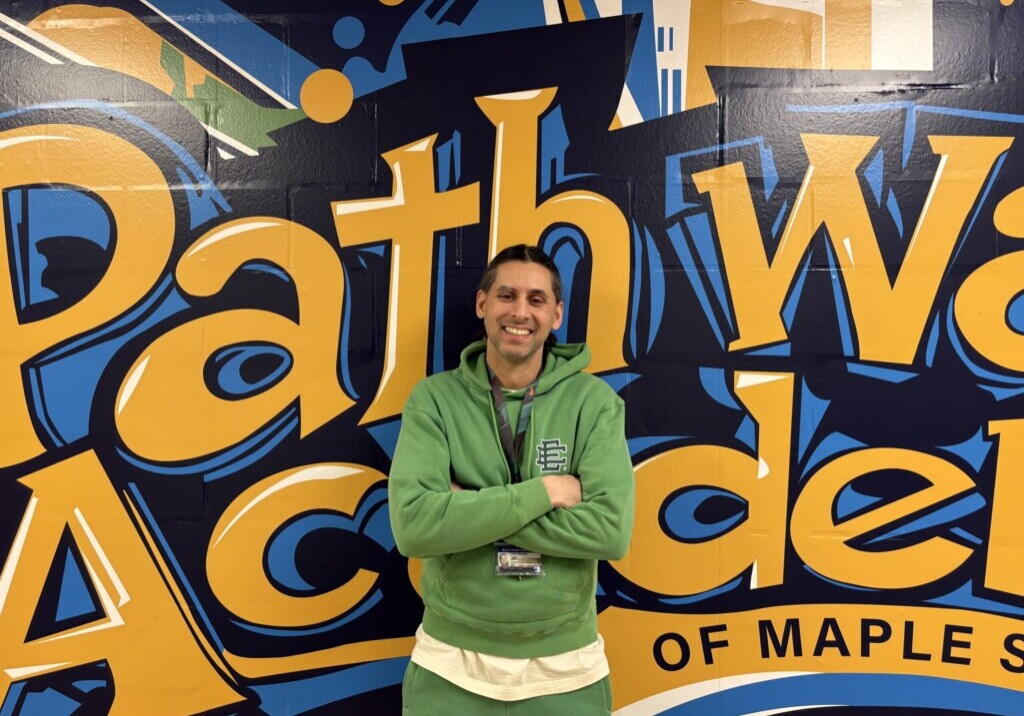
By Edwin Quezada
I want to put something on the table that might sound uncomfortable at first, but it’s the truth. We don’t only have an achievement gap; we have a regulation gap. Across New Jersey, we’re working hard to close academic gaps. We focus on planning, differentiating, tutoring and reteaching. But if our student’ nervous systems aren’t regulated, none of that sticks. You’ve seen it. The student who blows up over a minor correction, the one who shuts down halfway through class or the group that spirals the moment tension hits the room. These are not “bad kids.” These are people whose dysregulated nervous systems are responding exactly as the brain reacts under stress.
When students live with poverty, instability, racism, bullying, unsafe neighborhoods or unaddressed trauma, their brains adapt to survive, not to learn. The prefrontal cortex, the part of the brain responsible for focus, reasoning, language and empathy, goes offline.
When we teach as if everything is fine, we’re not fighting laziness or disrespect. We’re colliding with biology. It’s impossible to teach a child whose brain believes it is unsafe. You can throw every intervention at them, every tutoring session, every reteach lesson and nothing will stick if the brain is dysregulated. I have taught in Trenton, Camden and at Maple Shade’s alternative program. Throughout my career, self-regulation skills have been one of the most important things I employ in my classroom.
Alternative program at Maple Shade High School
Since opening in September 2024, Pathways Alternative School has been built around a simple belief: students learn best when they feel safe, supported and understood. We take pride in being a neurodivergent-friendly community and in welcoming a wide range of learners, including students who have experienced chronic absenteeism, credit challenges or the effects of ongoing trauma.
Our approach focuses on the whole child. Along with academics, we help students build the social and emotional skills they need to grow and succeed beyond school. We also try to meet students where they are by offering flexible ways to learn, whether that means working independently, one-on-one with staff or in small groups. With the support of our school counselor and team, we help students move from simply getting through the day to feeling more connected, engaged and confident in themselves.
The science is clear
This isn’t guesswork. It’s neuroscience, and it aligns directly with what some of the world’s leading trauma experts have proven. Much of my own understanding, practice and research as a trauma-informed educator is rooted in the work of Dr. Bessel van der Kolk, author of “The Body Keeps the Score.“
Dr. van der Kolk’s research made something obvious to me early in my career: the body literally stores trauma, and the nervous system reacts long before cognition does.
The Body Keeps the Score became one of my essential guides. It is a foundation for my classroom routines, professional development workshops and my entire approach to trauma-informed education. When educators understand the body-brain connection, student behavior stops feeling personal and becomes informative.
Self-regulation: the missing core subject
Imagine if emotional regulation were treated the way math and reading are: as a daily essential skill, not an as-needed intervention. Five to ten minutes of breathing, regulation and reflection can shift the entire tone of instruction. These aren’t “extra activities,” they are the foundation of all learning. A student in survival mode can’t access critical thinking. A student whose amygdala is activated cannot reflect, problem-solve, infer, analyze, or empathize.
When we teach the science of stress: what’s happening in the amygdala, how to calm the body, how to identify early warning signals, we are giving students control over the engine behind every learning task they will ever do.
This is something educators often forget: Self-regulation is not just for students. It’s for educators, too. A regulated teacher is the intervention. Students match our pace, tone and energy long before they ever absorb our content. Our nervous system becomes the anchor in the room. When we model calm, it allows students to co-regulate with us. And co-regulation is the bridge that leads to independent regulation.
Trauma-informed practice in the classroom
A trauma-informed classroom is not complicated. It’s not expensive. And it doesn’t require special training or technology. It requires consistency, predictability, safety and attunement.
Below is the daily three-step routine I use. It is grounded in neuroscience, aligned with trauma-informed care and accessible to teachers across all grade levels.
Mantra → Breathing → Mood for Learning.
This sequence regulates the body, the mind and the spirit. It returns the student to the present moment and makes their nervous system safe enough to learn and safe enough to attune to the educator.
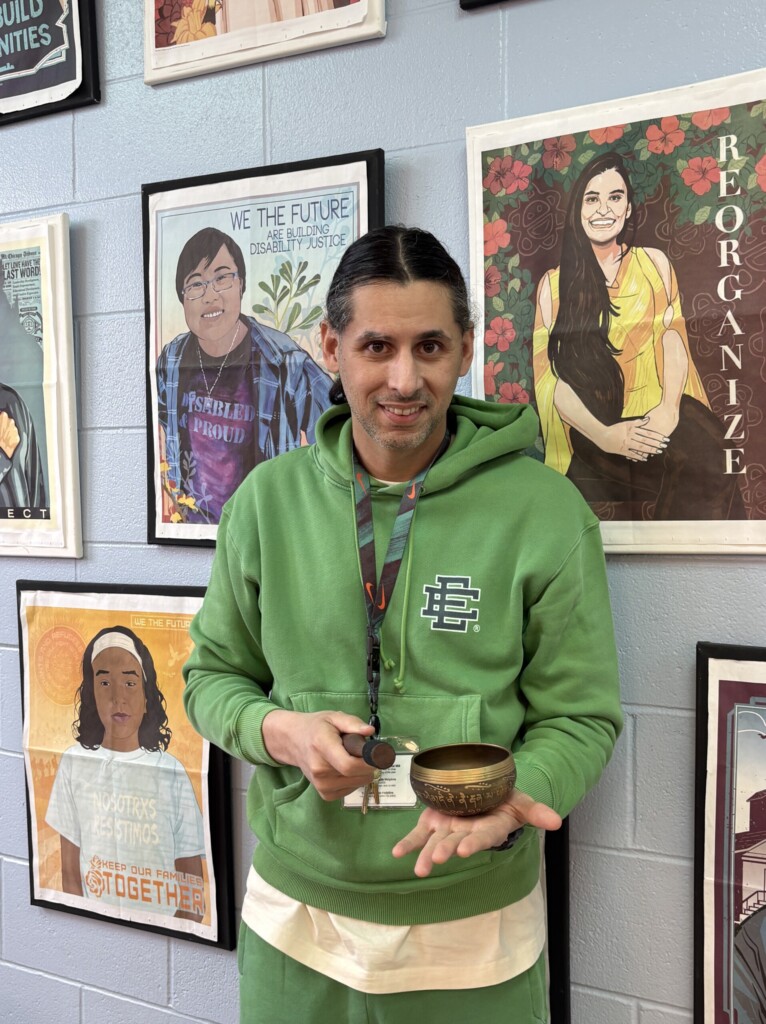
Step One: Mantra (one minute)
What it is:
A short phrase repeated together that signals belonging, safety and readiness.
Why it works:
A mantra interrupts stress-based thinking and reorients students toward collective identity and safety. It becomes a grounding ritual the same way athletes, musicians and performers center themselves before high-stakes moments.
What it looks like in the classroom:
Students settle into their seats. You offer a gentle cue:
“Alright team, let’’s get centered.”
The class repeats the following mantra after me:
“May all people be happy.”
“May all people be free.”
“May all people be healthy.”
“May all people be at peace.”
Some students whisper. Some say it firmly. Some say it quietly to themselves.
It doesn’t matter. The power is in the ritual. This is the predictable beginning that signals you are entering a safe space.
Actionable tip for educators:
Choose one mantra and stick with it for four to five weeks. Ritual becomes regulation.
Step Two: Breathing (one to two minutes)
What it is:
Intentional slow mindful breathwork designed to slow the heart rate and deactivate the amygdala.
Why it works:
Breathing is the fastest, most accessible way to regulate the nervous system. Students with trauma histories often arrive at class with elevated cortisol. Deep, slow, mindful breathing resets the body chemistry.
What it looks like in the classroom:
Your voice becomes calm and confident:
“Feet flat on the floor. Hands on your lap. Shoulders relaxed.”
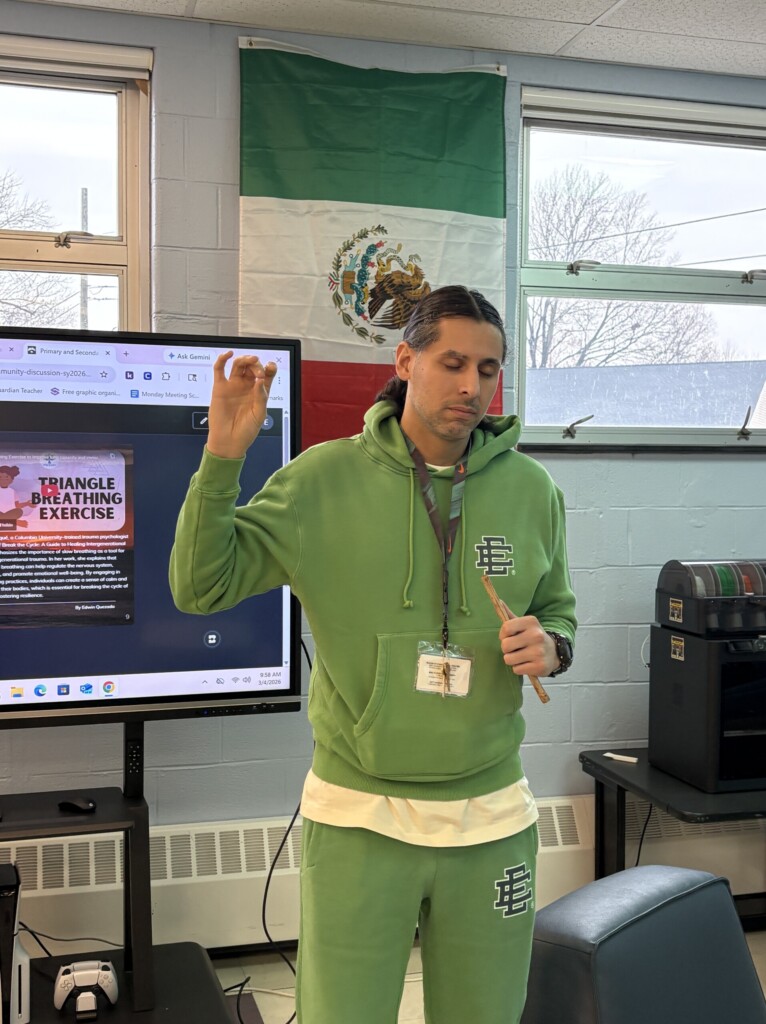
Then you guide with Triangle Breathing:
- Inhale for three seconds.
- Hold for three seconds.
- Exhale for three seconds.
Or a student-led version:
• Trace each finger as you breathe in and out.
The room gets quieter. A few students take noticeably deeper breaths. Some close their eyes. Some slow down. A minute later, the energy in the room has shifted, not because of compliance, but because of regulation.
Actionable tip for educators:
Pick one breathing technique and have students repeat it daily so they internalize it.
Step Three: Mood for learning (two minutes)
What it is:
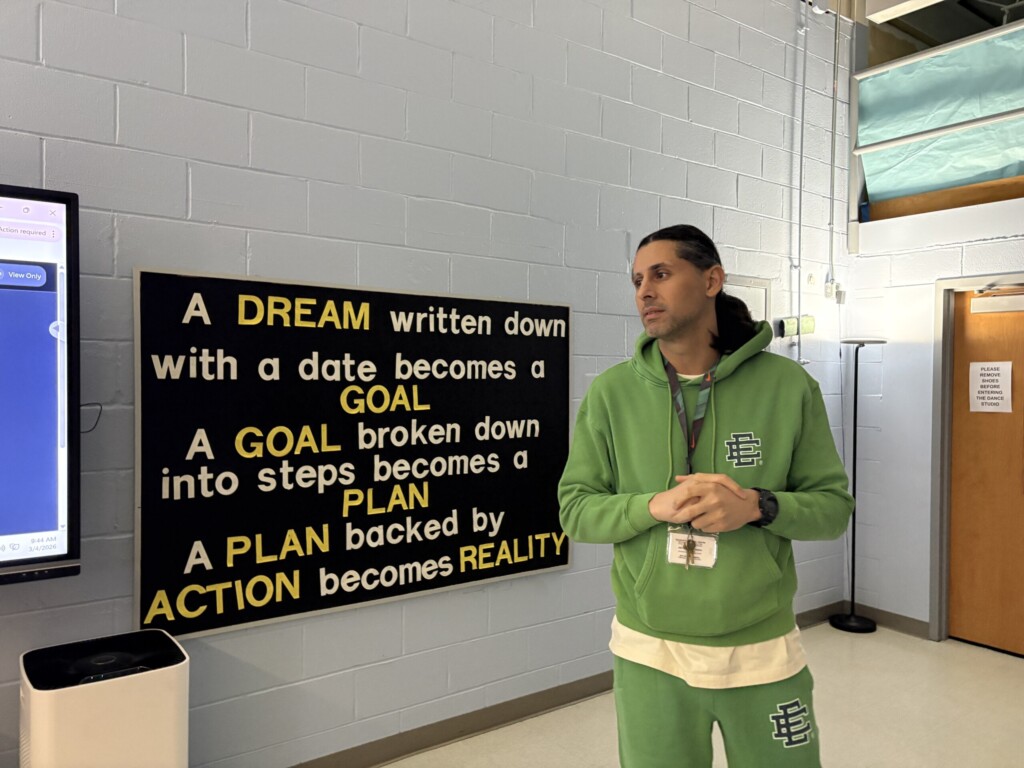
A simple, low-stress self-assessment that helps students recognize their emotional readiness. It also helps them understand that the calm they are feeling is their body’s natural state — the way they are meant to feel when they are regulated and ready to learn.
Why it works:
Students learn to recognize their internal state before it escalates. Teachers gain real-time insight that prevents conflict.
What it looks like:
You ask: “What is your mood for learning?” Students respond using colors, hand signals or words:
- Green: I’m ready. (Good) Thumbs up.
- Yellow: I need a moment. (In-between) Hand tilted/hand wobbles.
- Red: I’m here, but not fully prepared yet. (Not ready) Thumbs down.
There is no punishment for not being ready. No calling a student out. No embarrassment.
Why this question matters most:
It teaches emotional literacy. It validates internal experiences. It gives teachers data they can actually use. And most importantly, it builds trust.
Actionable tip for educators:
Always respond with support, not consequences. A student who says “red” is communicating safely. Do not punish them for it.
Routines create culture, which leads to change
When trauma-informed routines become consistent, the entire school environment transforms:
- Students feel safe.
- Classrooms stay calmer.
- Power struggles decrease.
- Students trust adults.
- Learning actually sticks.
Students move from dysregulation to regulation and from regulation to engagement. This is not about perfection. It is about predictable safety.
New Jersey can lead the way
New Jersey can lead the way on this issue by embedding trauma-informed and self-regulation practices directly into our state curriculum. That means:
- Teaching emotional regulation as a skill, not a reaction.
- Aligning well-being with academic metrics.
- Giving teachers real tools and training.
- Recognizing mental health as the foundation of academic success.
Educators are ready
At the 2025 NJEA Convention, I presented “Fostering a Trauma-Informed Learning Environment.” Educators practiced these routines with me: the mantra, the breathing and the Mood for Learning check-in. The feedback was clear: educators are ready. They see that regulation is not extra. It is the entry point to meaningful learning. If we want to close the achievement gap, we must close the regulation gap.
Healing is not separate from learning. Regulation is not separate from achievement. Trauma-informed education is not a trend. It is the future of effective teaching.
Edwin Quezada, M.Ed, is a trauma-informed educator at Maple Shade High School. He can be reached at quezada.edwin@gmail.com.