

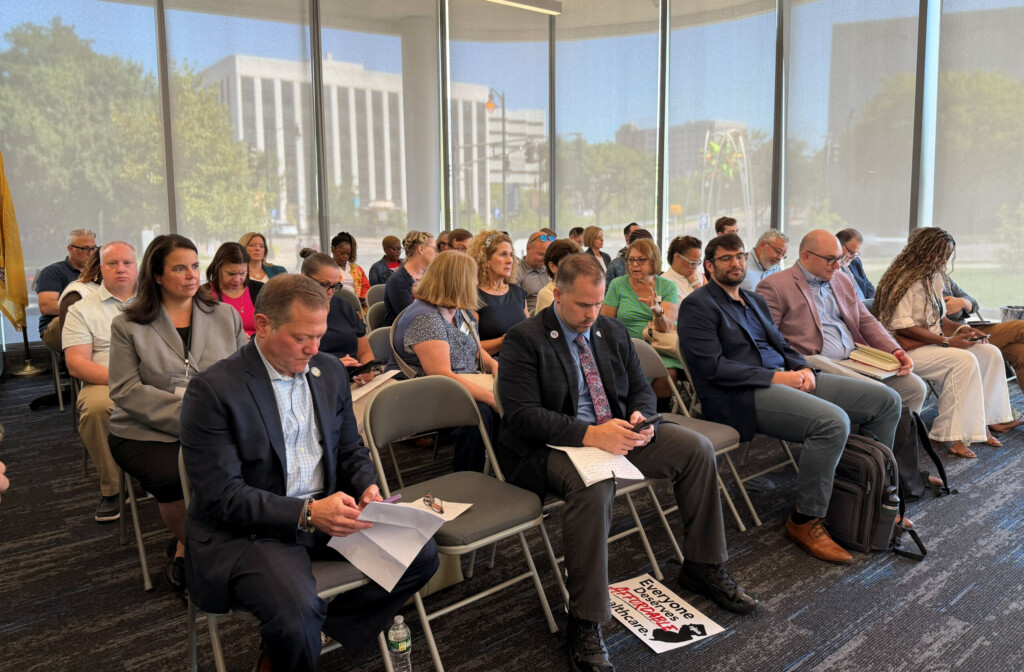
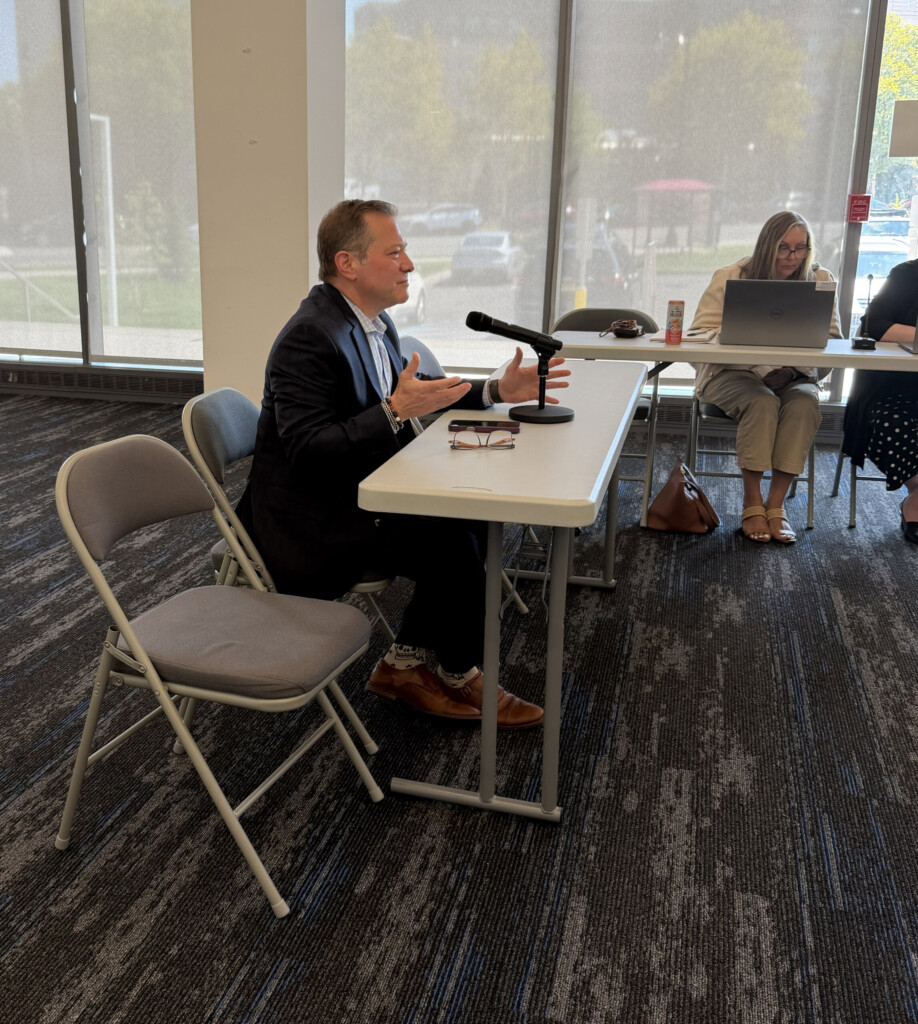
Yesterday, the School Employees’ Health Benefits Commission refused to pass a rate hike that would increase health benefit premiums by up to 39 percent in some school districts. NJEA members, led by NJEA’s elected officers, played a crucial role in delaying a vote on that increase from taking effect by testifying before the Commission about the need for more proactive work to address the systemic issues causing that staggering increase. By forcing a delay on the final vote until at least Sept. 3, the Commission gave the Division of Pensions and Benefits additional time to seek creative ways to address the factors driving this unsustainable increase.
Following the meeting, NJEA President Steve Beatty, Vice President Petal Robertson and Secretary-Treasurer Tina Dare released the following statement:
“The proposed premium increases in the School Employees’ Health Benefits Program are simply unsustainable for New Jersey’s school employees, their families and the districts that employ them. The magnitude of these increases makes clear that the current system is not working and that meaningful action is needed — both to address the immediate affordability crisis and to create a better, more sustainable system for the future.
“At its most recent meeting, members of the School Employees’ Health Benefits Commission asked that every available option be explored to mitigate the proposed increases. While a number of potential approaches have been identified, the options currently available within the existing structure do not provide the immediate and meaningful relief that school employees and districts need. Too many of the available choices simply shift costs rather than control them.
“As plan fiduciaries, our representatives on the Commission cannot simply accept exorbitant increases without ensuring that every reasonable opportunity to reduce costs has been fully explored. School employees and school districts deserve nothing less.
“This moment once again demonstrates a larger problem: the system itself needs structural change. The challenges facing the SEHBP cannot be solved year after year through short-term fixes, cost shifting or by managing around the edges of a fundamentally flawed structure.
“That is why we believe the Legislature must act on S4438/A5285. This legislation would create a new governance structure that gives employers and employees — the people who pay for, depend upon and have the greatest stake in the success of the program — a stronger role in managing school employee health benefits.
“Real reform must also confront the underlying forces driving health care costs. Insurance costs, hospital and provider pricing, prescription drug costs and other systemic pressures continue to place enormous strain on public employers and employees alike. We need a structure capable of aggressively pursuing savings, demanding greater transparency and using the collective purchasing power of New Jersey’s school employees to deliver high-quality, affordable health care.
“Fighting for meaningful health care reform is difficult work, but the consequences of accepting the status quo are too great. Every additional dollar spent on unnecessarily high health care costs is a dollar that cannot support educators, students, classrooms and communities. And every additional cost imposed on school employees makes it harder to recruit and retain the dedicated professionals our public schools depend upon.
“We are ready to work with the administration, the Legislature, employers and all stakeholders who share the goal of making health care more affordable and sustainable. In the immediate term, we continue to urge that every available option be examined to mitigate the proposed increases. But this crisis also makes it clear that we cannot continue to address the same problem year after year and expect a different result.
“New Jersey needs structural reform that gives employees and employers the tools and authority to control costs, protect high-quality benefits and demand greater accountability from the health care industry. The time to build that system is now.”