
$18,500 changed the trajectory of NJ’s teacher salaries
By Patrick Rumaker
Wednesday, Sept. 4, 1985, was my first day in the classroom as a salaried teacher. My anticipated annual salary for the 1985-86 school year was around $13,800.
Like many first-year teachers, I was overwhelmed as I tried to navigate my first days with my own students—at least if the journal I kept at the time is to be believed. In the anxiety-ridden pages of my now 40-year-old journal, there’s only one reference to something that should have been a big deal for me.
“Incidentally,” I wrote in early September 1985—and in much better cursive writing than I have now—the state approved a minimum salary bill. I now make $18,500 a year.”
I learned of my “incidental” good fortune earlier that same day when a teacher with many more years of experience came into my room and said, in a tone I took as sarcasm, “Well, the governor must love you! He just gave you a $4,000 raise!”
I quickly learned from other first-year colleagues in my school that my experience was not unique. What should have been a great day for us all was made awkward by the jealousy-tinged reactions of some of our veteran colleagues. To be fair, many others, despite their years in the classroom, were glad that something was being done to make teaching more attractive financially.
Whatever anyone felt at the time, the law was a game changer. At the time, 80% of New Jersey school districts had starting salaries below $18,500—some as low as $10,600.
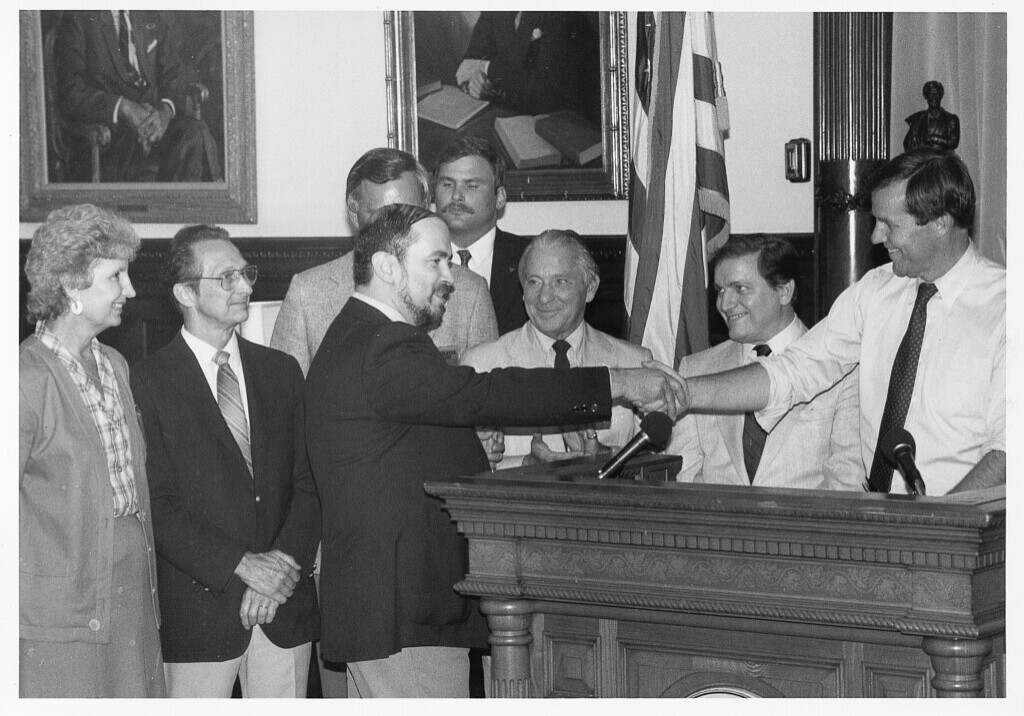
When Republican Gov. Tom Kean Sr., signed the Teacher Quality Employment Act (TQEA), which included the $18,500 minimum salary provision, NJEA hailed him as a hero.
NJEA at the forefront
Credit for that law goes to NJEA leaders and staff who understood the long-term implications of boosting the bottom of the guide. “Every teacher should be proud of NJEA and what it has done,” Kean said as he signed the bill.
Once TQEA was passed, NJEA quickly moved on to its next goal—a minimum starting teacher salary of $40,000. Then $50,000. Then more. Today, 62% of districts have negotiated starting salaries of $60,000 or more. Freehold Regional leads the way, with first-year teachers there slated to earn $80,780 starting in 2029.
A 40-year-old minimum starting salary law may not seem relevant today, but its significance should not be understated. In 1983, New Jersey’s average teacher salary—not just for first year teachers—ranked 14th in the nation. The impact of higher starting salaries in the state since 1985 consistently ranks us among the top three states in average teacher salary, which means it didn’t just benefit me, but also those same colleagues who had a hard time accepting my good fortune back in 1985.
NJEA is currently in the midst of another major effort to make our profession more economically sustainable for those early in their careers. The Tier 1 for Everyone pension justice campaign aims to eliminate inequity in the pension system and give new employees the same pension security their senior colleagues enjoy. And as with raising starting salaries four decades ago, it will benefit every member by making the entire system more sustainable in the long run.
I did go on to become a more confident teacher than I was in that first year. And thanks to the efforts of my local association bargaining teams and NJEA, teaching remained a sustainable career choice. Let’s stay united and keep it that way.
Patrick Rumaker is an associate director in the NJEA Communications Division.