
By Jami Centrella
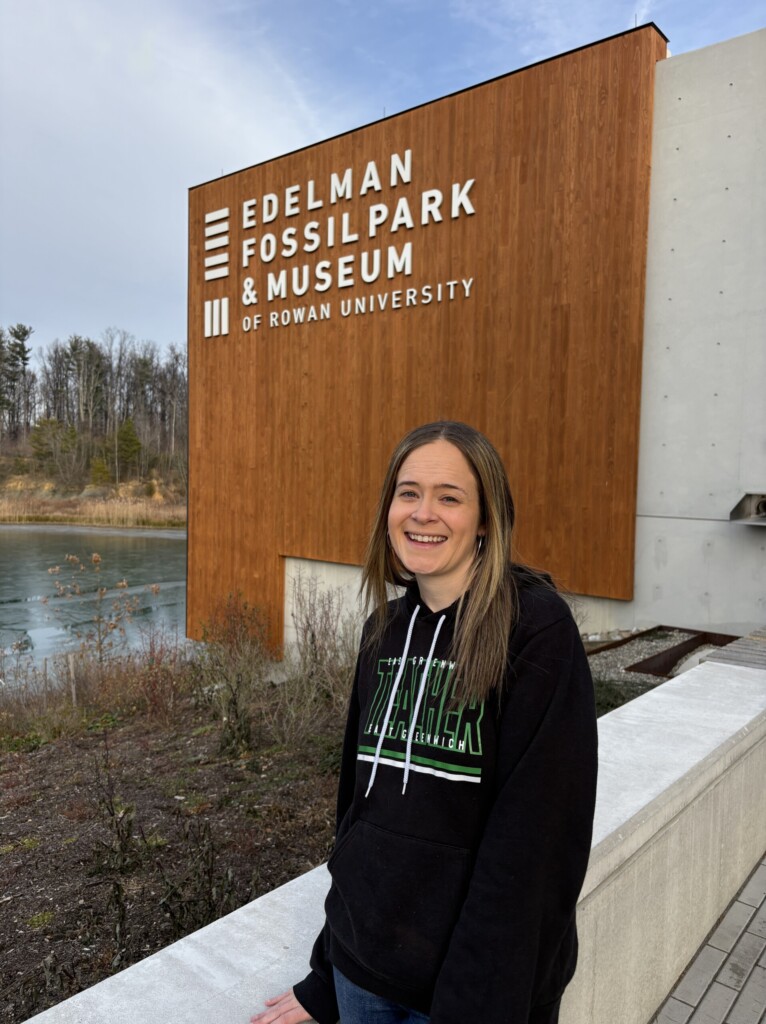
In October, the East Greenwich Education Association (EGEA) hosted a night of discovery at the newly opened Edelman Fossil Park & Museum in Mantua Township. The EGEA provided free admission to all students, families and staff of the East Greenwich School District. They reserved the Rowan University museum for a family-centered evening of exploration through local fossils and prehistoric discoveries long preserved in New Jersey’s soil.
As an EGEA member and sixth-grade English teacher at Samuel Mickle School, I spend my days guiding students through stories, ideas and worlds both familiar and strange. I myself am a “wanderer” by nature, and I try to teach my students that curiosity should chart their course, much like Alice following the White Rabbit down the rabbit hole. Most of the time, my wandering is just a good excuse for getting lost, but I like to think of it as pursuing life’s side quests. So, an evening spent wandering through a museum seemed perfectly suited to me, yet I had no idea it would awaken a dinosaur of questions I hadn’t even known I was carrying.
Every day in the classroom, I strive to bring one message to my students: you matter, and what we learn together matters too. It is a simple message that guides the work of every teacher in the East Greenwich School District. However, as I wandered among the prehistoric displays that evening, I found myself reflecting on the true weight of that message. In today’s world, value often feels conditional. Too often, it seems to be defined by how we look, act, think or believe. Yet standing in this world of fossils, a world full of stories begging to be told, I couldn’t help but wonder whether true value might be something far deeper than the constructs we have created around it throughout time.
Layers of time vs. layers of worth
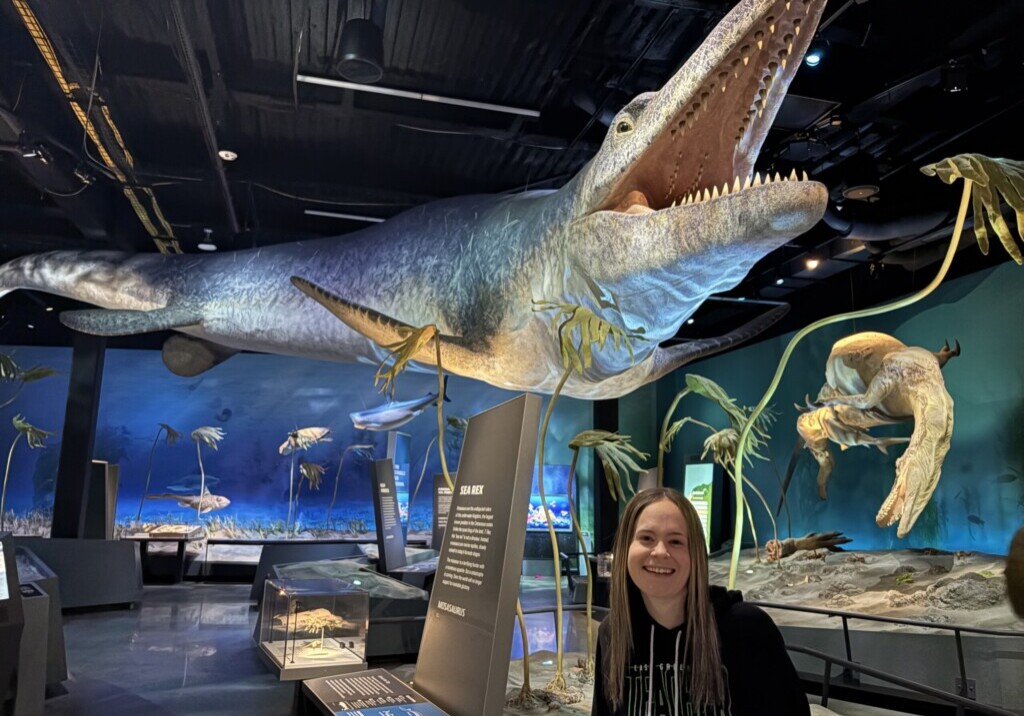
There is a sense of mystery that floods your spirit as you enter the doors of the Edelman Fossil Park & Museum. As you approach the first exhibit on the main floor, the air starts to feel slightly humid, and the walls around you display the unique landscapes of the time. The amber lights make you feel almost like you are an outsider entering a world and a time that is no longer yours. The larger-than-life displays truly transport you back in time to the prehistoric era, tracing how the dinosaurs that once roamed the earth navigated their way from thriving to surviving to, ultimately, their extinction.
One display, in particular, caught my attention: two dinosaurs locked in a battle, the full-scale replica freezing that moment in time. The jaw of the attacked dinosaur hung open, as if it were letting out a nearly audible cry for survival. It was at that display that I turned to a member of my family and asked, “Can you imagine living in a world where the only reason you exist is to survive?” The question haunted my thoughts as I continued to wander the exhibits, surrounded by the laughter and curiosity of children exploring and asking questions, their fascination blending with a newfound sense of discovery. Lost in the energy of the experience, I found myself returning to the question of value.
When so much around us feels upside down, when it seems unclear who or what is considered “most important,” am I helping my students see that their existence is more than just survival? Do they know that simply being a human being makes them valuable? As educators, our primary focus is always our students. We focus on their needs, those that are both seen and unseen, and we hold the responsibility to use lessons from the past to inspire the future. We are helping to close the gap between what was and what could be, and sometimes they’re the ones that show us exactly how to do that. Watching the next generation find joy in understanding the mysteries of the past reminded me that hope begins with curiosity and that value is often discovered over time. For me that raised the question: how do we help our students not just search for meaning, but notice that they are creating their own legacy every day?
Preserving stories
Following the main-floor exhibit, visitors can proceed to the lower level of the museum, where they can examine artifacts, explore “please touch” displays and even encounter some living creepy crawlers with origins dating back to a “land before time.” The lower level also features exhibits on Darwinism, the origins of man and displays that pose the timeless question: Where on Earth did we come from?
My favorite part of this floor was the glass-walled room where visitors can watch museum curators clean and preserve fossils discovered on the museum grounds. While the preservation work was not actively happening during our visit, a museum worker patiently explained the process to young explorers outside the space. Preserving a fossil is meticulous work. It is a painstaking task filled with purpose. Its purpose is to reveal a story worth sharing.
In many ways, our students are like those fossils. With guidance, attention and care, their curiosity, ideas and actions can be preserved and shaped into something enduring. Every day, we are helping them learn to create a story worth telling. A story that, like fossils, can endure over time. And how much greater is their story than that of the dinosaurs of South Jersey?
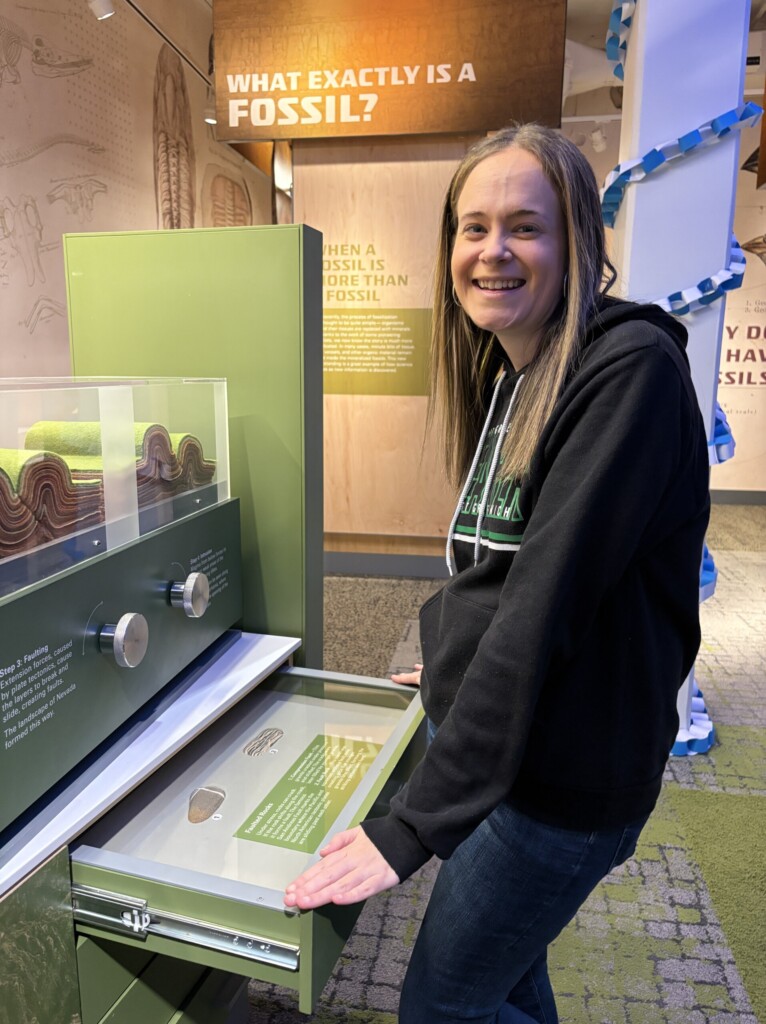
I saw this potential firsthand at one of the origins of man exhibits. A young community member confidently opened a drawer found in the display, nudged her brother aside, and explained to him what she had found inside the drawer and why it was such an important discovery. I have no idea whether her explanation was accurate, but the curiosity that drove her to explore, and the confidence that followed, revealed something far more important: curiosity leads to confidence, confidence reveals value, and with care, that value can endure just as fossils do. This value allows important stories to continue being told long after they were first uncovered.
From fossils to futures
The Edelman Fossil Park & Museum also offers a variety of additional opportunities for visitors to explore, including a fossil dig and a gift shop sure to delight everyone from the youngest scientist to the most seasoned explorer. Our night at the museum was a family-friendly event that sparked curiosity in learners of all ages. While the museum offers plenty of reading opportunities, it also features many hands-on activities, from interactive games and scavenger hunts to petting horseshoe crabs (which was definitely not my thing, though I admired everyone else’s enthusiasm).
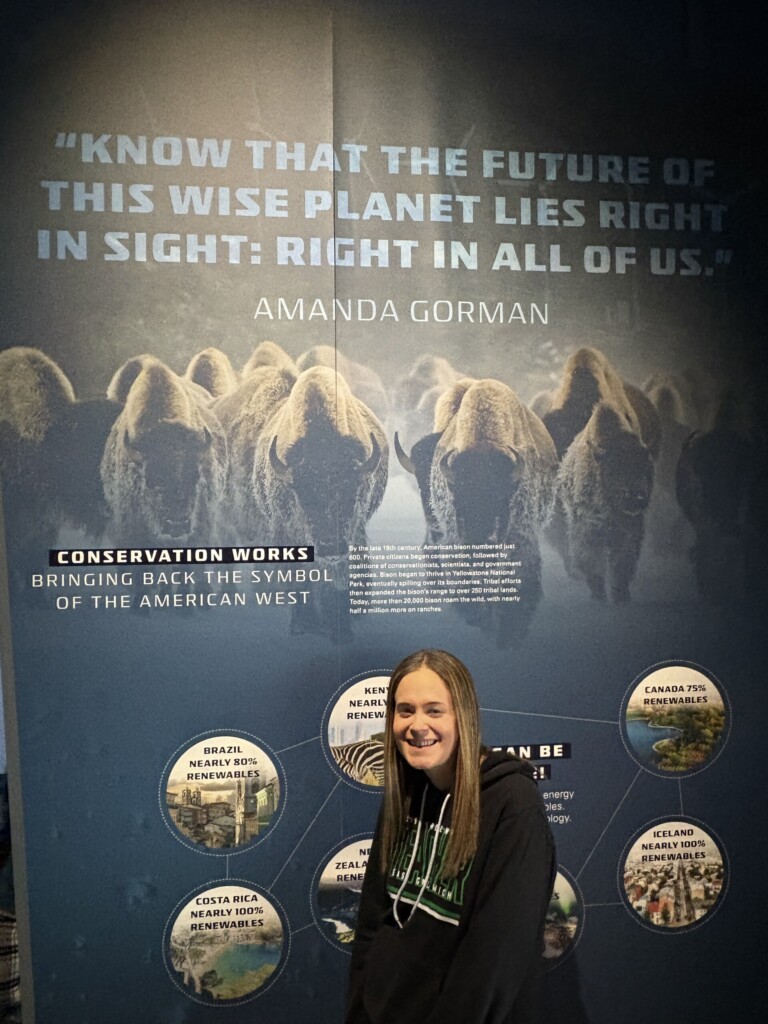
Yet amid the fun and exploration, there is also a sense of wonder that finds its way into the hearts of every wandering traveler. One of the final rooms I explored in the museum was the “Hall of Extinction and Hope.” Here, visitors learn about the timeline of events that caused the extinction of the dinosaurs. You can view meteorites and witness the looming effects of climate change on the past, present and future. I don’t believe it is any accident that this room is labeled extinction and hope. It is a solemn reminder that unless we begin to change how we treat our planet, humanity could follow the dinosaurs’ same path to extinction. But can we take this idea even further? Are we on the brink of the extinction of kindness? Hope? Our very humanity? Some would argue we are. Yet, when I look at my students, I see a generation actively trying to swing the pendulum back toward acceptance, empathy and positive change.
Though the world seems to be living in a state of constant chaos, the Edelman Fossil Park & Museum offers a brief pause and a space for quiet discovery. It allows you the freedom to ask questions about the unknown and to use those questions to fuel change. As educators, we are privileged to create this same space in our classrooms every day, allowing students to ask questions, explore and take meaningful action. I, for one, am profoundly hopeful for what this next generation will unearth.
A huge thank you goes to EGEA for hosting such a meaningful event for our school community. Union events like these are the glue that holds New Jersey public schools together. In a society always questioning what truly matters, I am grateful to belong to an organization that supports educators and empowers them to help students see their own value. This cyclical relationship helps our school communities create stories that endure. Just as fossils preserve the past, every student carries a story worth telling, and if the future is in their hands, I have no doubt it will be extraordinary.
Jami Centrella is a sixth-grade English teacher at Samuel Mickle School in East Greenwich. She can be reached at jami.centrella@gmail.com.
New Jersey’s prehistoric history
New Jersey leads the nation in many positive ways. Our public schools are the best in the nation. We are national leaders in technology, pharmaceutical and biotech innovation. And we are also the state with the longest geological history in the nation. Beginning in the 1780s, dinosaur and fossil remains in New Jersey were reported to the American Philosophical Society. In 1838, the first relatively complete set of dinosaur bones were discovered in Haddonfield. Mastodon and mammoth skeletons have been found in Sussex County. Some of the world’s most ancient life records have been found in the Highlands. From fossils to innovation, New Jersey’s deep prehistoric roots remind us that our state’s story stretches back millions of years and continues to shape the future.
Learn more
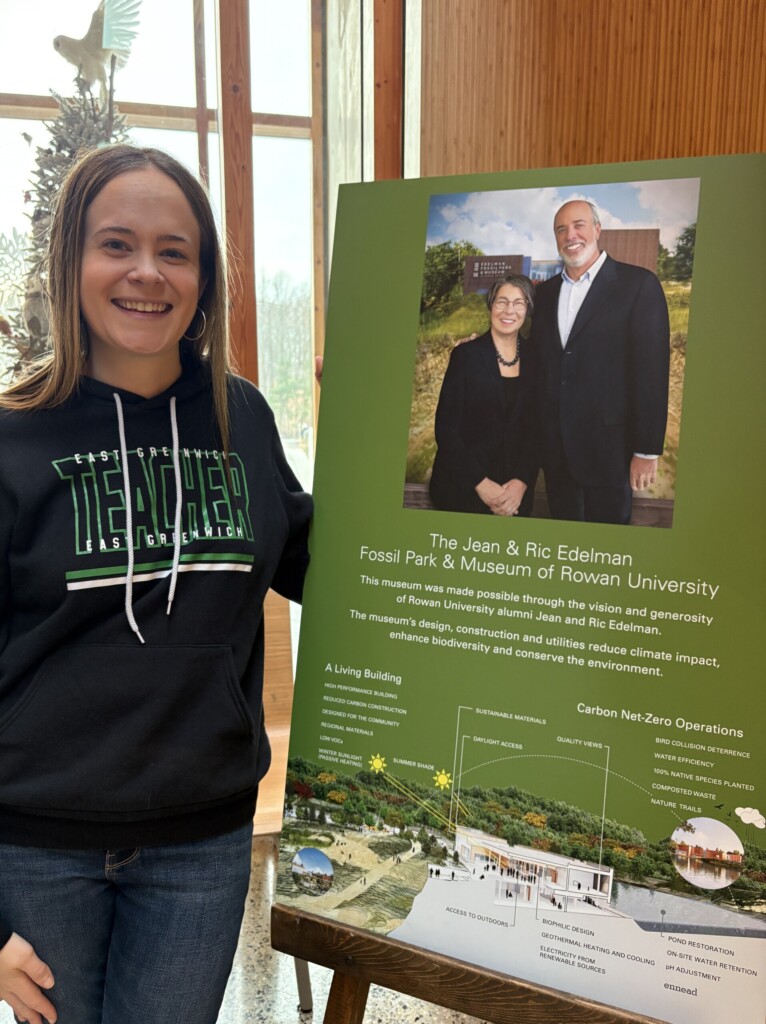
The Jean and Ric Edelman Fossil Park & Museum of Rowan University in Mantua is a unique paleontological site and museum built around a rich Cretaceous-era fossil bed in a former marl quarry, offering hands-on experiences like real fossil digs, dinosaur exhibits, trails and educational programs focused on paleontology, biodiversity and sustainability, aiming to connect people with Earth’s history and climate challenges. It features New Jersey’s largest carbon net-zero building, promoting environmental responsibility alongside scientific discovery. To learn more, visit efm.org.