

By Kathryn Coulibaly
The Buena Regional Support Staff Association (BRSSA) faced an existential threat. After internal turmoil, including going without a local president for a while, the association was at risk of falling below the 50% threshold for union membership.
NJEA field representatives Crysty Jenkins and Stephanie Tarr organized extensively to help maintain the association’s status. They tasked NJEA UniServ consultant Anthony Angelozzi—who also serves as the president of the Hammonton Education Association—with working alongside the association on negotiations.
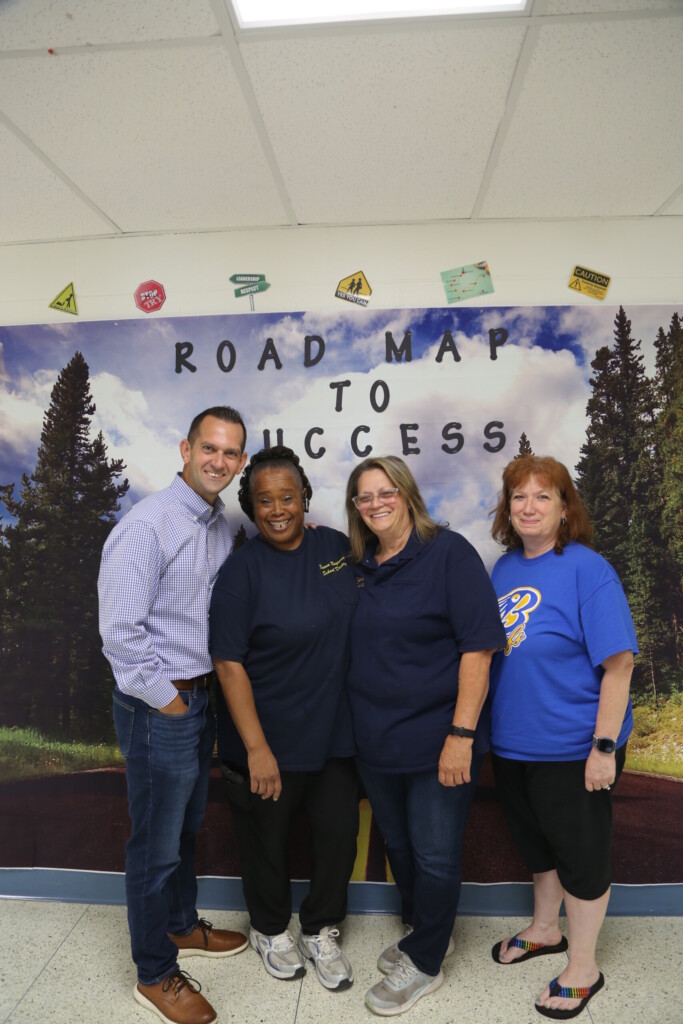
The BRSSA’s new leadership team quickly came together.
“I stepped up because I didn’t want us to lose our union,” says Doris Robinson, the new BRSSA president. Robinson, the district’s head custodian, has served Buena’s students for 18 years.
Annette Ralph volunteered to be vice president. After 34 years in the district “doing everything except teach,” she now works as a mail courier.
Dawn Boyle, a special education secretary for 12 years, serves as the union’s secretary.
“This was all of our first time with negotiations,” Robinson said. “It was a little intimidating. We didn’t want to let anyone down. We wanted to do a good job for all our members.”
Implementing a best practices bargaining plan
Angelozzi walked them through the process to ensure they felt comfortable and confident. Because all three leaders live in Buena, they are very well known in the schools and in the community. But because they were all new to union leadership positions, it was a fresh start in terms of the association’s relationship with the board, which had been acrimonious in the past.
“I tried to take on as much of the stress as I could to make sure they felt secure throughout the process,” Angelozzi recalls, “and to help protect their relationships with the board members.”
Angelozzi was committed to helping the leaders through a best practice, “squeaky-clean” negotiation that would restore confidence in the association and strengthen the leaders’ skills.
“We spent a lot of time organizing in the local,” Angelozzi says. “We sent out surveys and gave the members plenty of time to express what they care about. That’s overlooked sometimes as teams rush to the table. We knew that if we were going to fight for something, it had to be what the members wanted.”
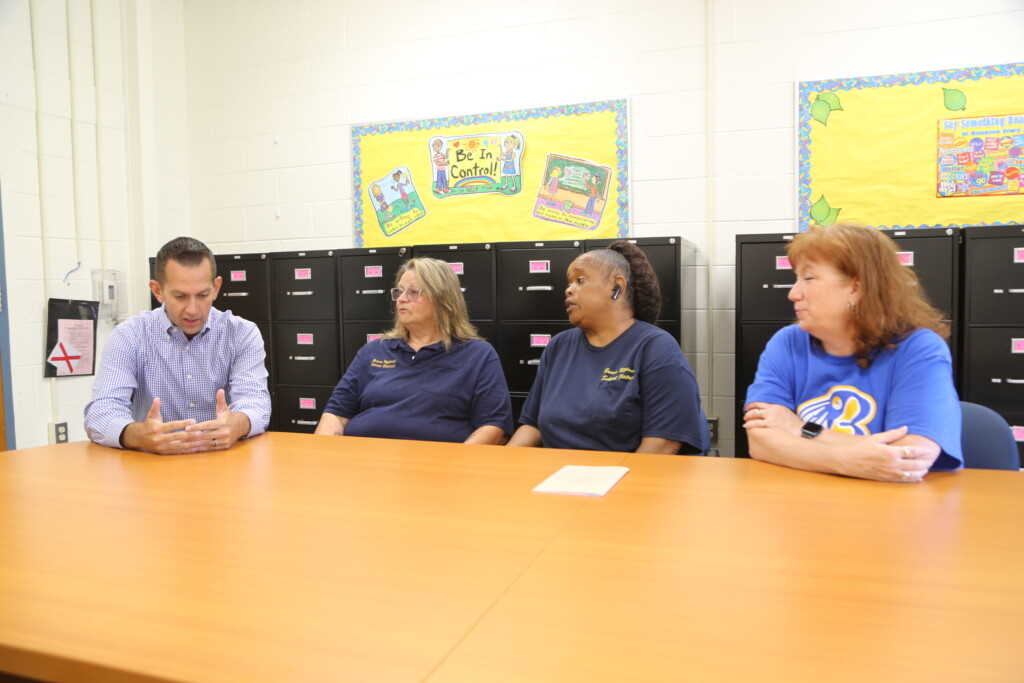
The team, with Robinson, Ralph and Boyle, worked closely with NJEA Associate Director of Research Greg Yordy and used NJEA’s resources. They prepared proposals, identified non-negotiables and practiced realistic compromise.
“In negotiations, you put together a proposal, but you’re almost never going to get everything in it,” Angelozzi explains. “We set our proposals and determined which proposal items we would fight to the end on. We also knew we had to be realistic, embrace compromise and provide counter proposals. It takes a lot of time.”
The team also invested effort in understanding the board’s proposals.
“We really tried to understand why they wanted what they were asking for,” Angelozzi says. “Because we put so much effort into understanding their position, they were more willing to listen to our perspective. There must be mutual respect and actual consideration of each other’s proposals.”
Angelozzi explained that saying yes to one of the board’s proposals often incentivized the board to agree to one of the association’s ideas.
“If you go in and say no to everything, you’re going to be met with the same spirit,” Angelozzi says.
“We used best practices to develop the salary guide,” Angelozzi says. “We explained what the increment costs meant. Not only was it good bargaining, but it was education for the team. By the time they do this again, even though it’s only their second time, they’re going to be really good negotiators because we did everything right the first time and took time to explain it.”
Sitting down at the bargaining table
The association began bargaining in early fall 2024 and reached a deal by February 2025.
Walking in for the first time was intimidating for the new team, but by the end, they all felt that the board viewed the team as equals.
“We presented a professional, united front at the bargaining table on behalf of our 102 members,” Robinson said. “We took the time to educate the board on why we wanted what we were proposing, and the board listened.”
The association reached a five-year deal with the Buena Board of Education. They settled on a 3.5% salary increase for all five years, which is comparable to the county average and matches the percentage negotiated by the teaching staff, who are in a separate union, the prior year.
One of the association’s biggest priorities was a vision plan. Every other union employee in the district has access to a vision plan. While the board did not agree to vision this round, the association secured a corrective lens reimbursement for members. They also negotiated a $100 shoe reimbursement for buildings and grounds employees. In addition, members gained more flexibility in using a personal day. BRSSA members can now use a personal day without administrative approval for entertainment and recreation.
“That’s a quality-of-life proposal,” Angelozzi says. “It makes their life better. It doesn’t cost anything, but it’s something that the staff appreciates.”
The union also was able to increase the annual Black Seal license stipend for buildings and grounds employees to $650. All buildings and grounds employees hold the license.
Using all the tools
One of the association’s biggest incentives to settling a five-year deal was the protection against privatization it provides educational support members. Buena has a long, unfortunate history of privatizing educational support professional positions. Thanks to NJEA’s political action efforts, greater protections are now in place.
In 2020, Gov. Phil Murphy signed one of NJEA’s highest-priority bills. The law protects ESPs by prohibiting the privatization of their jobs while a collective bargaining agreement is in effect. In addition, it also requires employers to provide written notice and negotiate with the local association before entering a subcontracting agreement after a collective bargaining agreement expires. Finally, it ensures that any employee displaced by a subcontracting agreement retains seniority and recall rights.
“This took many years of political organizing, working to educate legislators on the importance of ESP positions, and electing pro-public education and pro-union candidates to the Legislature,” says Angelozzi. “Political action is an important way that unions fight for their members’ interests.”
Building a new cycle of success
“Even when we ratified, one of the things I was proudest of was that the members had a lot of questions and concerns, and we all took time to explain the proposal,” Angelozzi says. “The contract was ratified unanimously. I think that shows the team did a great job. We broke some cycles of bad relationships.”
Robinson, Ralph and Boyle are already taking notes on what they want to achieve in their next round of bargaining.
Ultimately, settling the contract helped bring an end to a difficult era in Buena Support Staff’s history. The union had long carried a reputation that serving as a president of the support staff put members’ jobs at risk, after several past presidents were fired.
“To get the deal done and have the whole team smiling at the end, feeling like they had done something good for their members is what makes it all worth it,” Angelozzi says.
Kathryn Coulibaly is an associate director in the NJEA Communications Divison.