A journey fueled by teachers, language and hope
By Alejandro Mejía
I was born and raised in the Dominican Republic, a Caribbean paradise full of warmth, rhythm and tradition, but also marked by deep poverty and limited opportunity. In our small rural community, school often took a backseat to survival. Many mornings, instead of sitting in a classroom, I was out on our family’s plantations helping harvest crops under the relentless sun. My mother, raising five children on her own, would remind us, “El trabajo duro da frutos” (“Hard work bears fruit”), even when that work kept us away from school.
She did the best she could with what we had. For that, I’ll always admire her strength. But she also knew that hard work alone wouldn’t be enough. Wanting more for me—more stability, more education, more hope—she made the life-changing decision to send me to the United States. I was still a child when I boarded a flight to New York City, chasing a future that none of us could yet imagine.

A new world, a new language
When I arrived, I couldn’t believe what my eyes were seeing. The skyscrapers I had seen only on TV now stretched into the sky above me. But beneath the excitement was fear. I had entered a world where I couldn’t speak the language and didn’t understand the culture. The only English I could say was, “I do not speak English.”
That language barrier quickly became a target. My accent and mispronunciations drew laughter, and the word “immigrant” was often tossed at me like an insult in school. What my classmates didn’t know was that the quiet kid with the broken English would eventually become fluent and fiercely proud of where he came from.
I lived in Washington Heights, New York for five years—a mini Dominican Republic taking over a section of Manhattan. Empanadas on the corner, bachata floating through open windows, Spanish spoken on every block—it felt like home within a foreign land. I was enrolled at Public School 115, where I found not just teachers, but lifelines.

Teachers who believed in me
Ms. Montgomery, my English language learner (ELL) teacher, showed endless patience and kindness. She never rushed me or treated me as less than. Instead, she guided me gently, helping me navigate both language and culture. And then there was Ms. Reynoso, the dance teacher who became my surrogate mother while mine remained back in the Dominican Republic. She didn’t just teach me how to dance; she saw me, listened and made me feel safe.
Dancing into possibility
During my first year in the States, my school participated in a citywide ballroom dance competition that changed my life. I was still learning English, but I was also learning how to master the rumba and the swing. That journey became part of the documentary “Mad Hot Ballroom,” which followed our school and others as we discovered discipline, grace and community through dance. Because of the film, I traveled to Japan for its premiere and even attended Sammy Sosa’s birthday party in the Dominican Republic, flying on his private jet. For a boy who once harvested fruit to survive, it all felt surreal.

Back home, finding identity
But life, as it often does, took another turn. After struggling with rejection tied to my identity as a Dominican boy, I returned to the Dominican Republic to be with my family. While it felt like a setback, it gave me space to reconnect with my roots and appreciate my culture through a new lens. I attended school again, this time as a teenager—and formed friendships that helped me better understand myself.
A fresh start in Hazleton
Eventually, I returned to the U.S., this time to Hazleton, Pennsylvania, where I enrolled as a senior in high school. I was in a new town with new challenges, but one constant remained: education. That year, something extraordinary happened—I was adopted by a former educator with more than 30 years of classroom experience. He became my hero, encouraging me to believe that I was capable of more.
College and beyond
After graduating high school, I obtained a full scholarship to Bridgewater State University in Massachusetts. From there, I transferred to Union County College, earned my bachelor’s degree in Spanish from Kean University and my master’s in education from Rutgers. I was even chosen as the commencement speaker at graduation, watching my mother and adoptive father beam with pride from the audience.

Teaching with heart
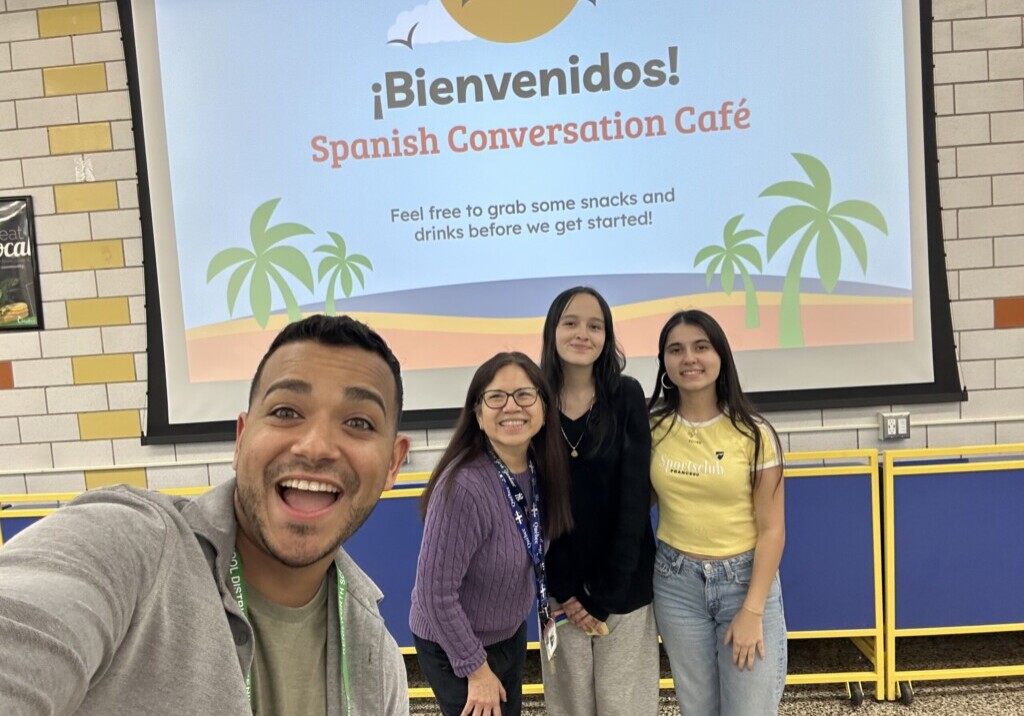
Becoming a teacher in the very country where I once felt invisible has been the most meaningful chapter of all. Teaching Spanish, my native language, has been both a challenge and a privilege. There is not a single day I go home without a story worth sharing. My students constantly remind me why I chose this path.
One student, newly arrived from another country, barely spoke. Teachers assumed he was shy or unmotivated. But I knew that silence—I recognized the fear behind his quiet eyes. I offered him space and support, and within weeks, he began to speak up and make a home away from home while at school. Not just in Spanish, but in his own voice. His story wasn’t unlike mine; his story just needed time to breathe.
Another time, I sent a simple message home to a student’s family, praising their child’s effort. The next day, the student returned with tears in her eyes.
“My mom cried,” she told me, “because no teacher ever said anything like that before.”
That reminded me how often immigrant parents are misjudged. They’re not disengaged; they’re navigating a system that often feels foreign and intimidating. The jargon, the formality, the fast pace—it can be overwhelming. Sometimes a warm phone call, a translated note or simply acknowledging a parent’s effort can go further than we think. Most parents didn’t have formal schooling and cannot understand our generic mass emails or the colorful classroom newsletter we send out in English. Sometimes a simple step like providing a translated version goes a long way—believe me.
I’ve also learned that behavior is often misunderstood through a cultural lens. Some families view questioning a teacher as disrespectful. Others come from backgrounds where formal education wasn’t accessible, so school can feel like uncharted territory. When a student doesn’t make eye contact or a parent misses a meeting, I remind myself to ask, “What’s behind this?” instead of jumping to conclusions. Could their mom and dad have multiple jobs to make sure they can provide for their children? Are children staying up late because they’re caring for younger siblings?
And representation—seeing yourself in your teacher, your textbooks, your classroom walls—matters. One day, I handed out a short reading with a character named after a student. She lit up and said, “That’s me!” That moment of recognition and visibility reminded me that our classrooms should be mirrors, not just windows.
Through it all, the greatest tool I carry is empathy. When a student falls asleep in class or shows up without homework, I try to look beyond the surface. Maybe they were up late helping siblings, translating for parents or working a shift after school. When we lead with understanding, we create space for growth and healing. I keep a secret stash of candy, which I give to those I notice are half asleep. I then reach home to make sure all is well and no deeper issues are going on.
Honored, humbled, inspired
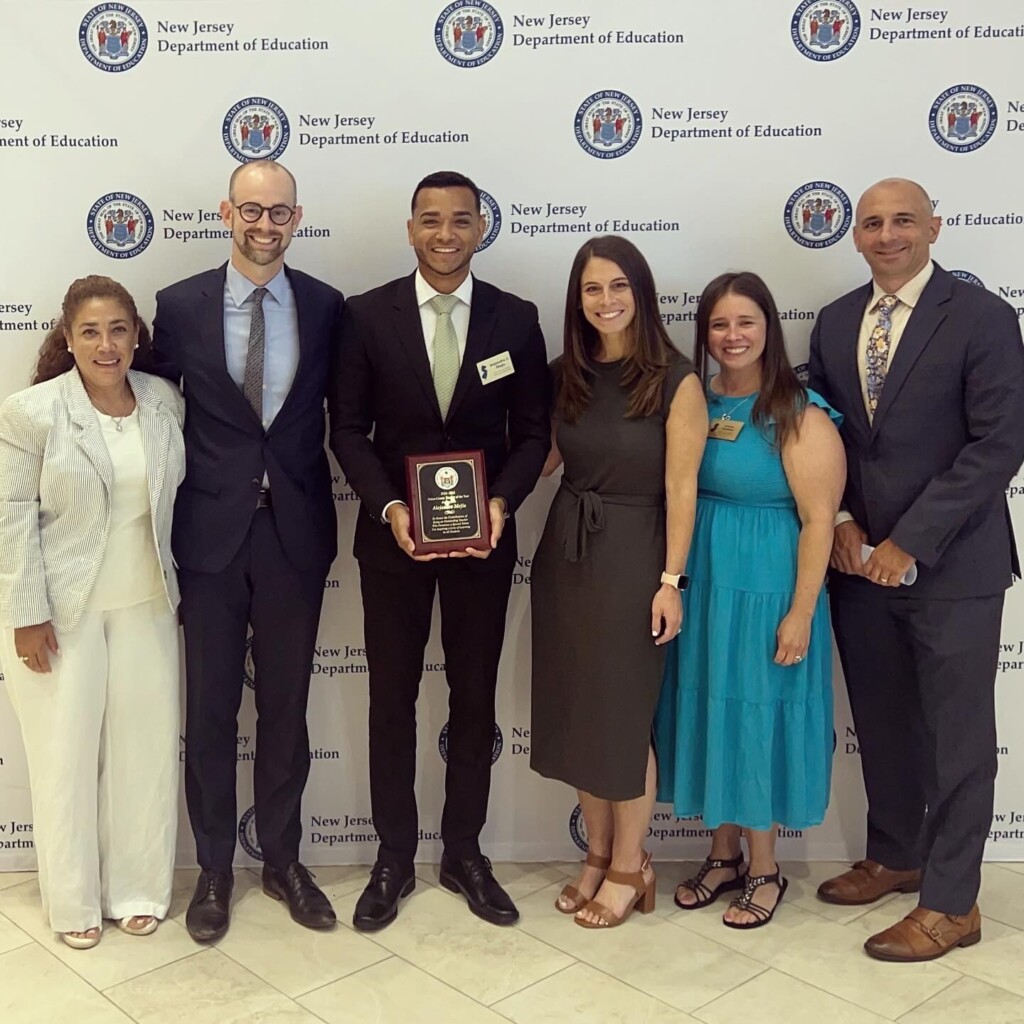
In 2024, I was named Union County Teacher of the Year. Standing on that stage, holding the plaque with my name on it, I thought of my mother, of those early mornings on the plantation and of the long journey that brought me here. I thought of my students—especially those who feel like they don’t belong—and how representation matters not just in stories, but in reality. That honor wasn’t just mine; it belonged to every teacher who saw me, every peer who welcomed me and every student who trusted me with their learning.
That recognition deepened my commitment to helping students who arrive in our schools facing barriers invisible to many. These students often enter with limited English, unfamiliarity with school systems and the emotional weight of migration. As educators, our role is not just to teach content; it’s to be interpreters of their experience.
Supporting every student
Building strong relationships begins with intentional listening. When a student is quiet, we should lean in, not pull back. We should provide opportunities for them to participate nonverbally—through drawing, gestures, visuals and movement—while their language skills catch up.
We also need to meet families where they are. That could mean using translation apps for quick communication, offering multiple ways to attend parent-teacher conferences (in person, by phone or virtually), or sending home short notes in their native language. Even small gestures like learning how to say “hello” or “thank you” in a family’s language can open doors.
Creating routines and visuals in the classroom can reduce anxiety for newcomer students. Simple things like a labeled classroom map, illustrated instructions or bilingual word walls can go a long way in helping students navigate their new environment with more confidence.
And perhaps most importantly, we must check our assumptions. If a parent misses a meeting, it doesn’t mean they don’t care. If a child isn’t turning in homework, it doesn’t mean they’re lazy. Our students may be translating bills at home, working late-night shifts or caring for younger siblings. Their resilience is immense, but they still need us to believe in them.
Educators may not always realize the depth of our influence. But when we create classrooms where multilingual students feel safe, celebrated and supported, we are not just teaching a subject; we are changing lives.
From student to teacher
I came to this country as a boy who didn’t speak the language, who missed school to work, who felt the sting of “otherness.” Today, I stand in front of classrooms as a proud Spanish teacher, helping students write their own stories, many of which begin where mine once did.
To every educator reading this: you might be someone’s Ms. Montgomery, someone’s Ms. Reynoso or even someone’s Mr. Mejía. You may be someone’s lifeline. Don’t underestimate what your kindness, patience and belief can do.
Alejandro Mejía is a Spanish teacher at David Brearley Middle-High School in Kenilworth and the 2024-25 Union County Teacher of the Year. He received the Educational Leadership Award at Union County’s Hispanic Heritage Day on Oct. 5, 2024.