How New Jersey students are testing 250 years of American ideals
By Theresa Maughan
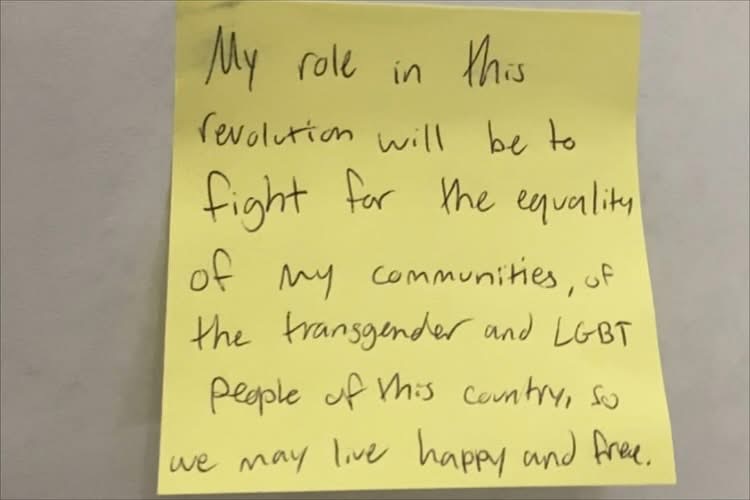
On the eve of the nation’s 250th birthday, my students are discovering that the American Revolution is less a finished story than a question still posed to every generation: How far have we really come in living up to our founding ideals of liberty, equality, justice under the law, representation and tolerance? Drawing on my work with the with the New Jersey Department of Education’s (NJDOE’s) Revolutionary Schools initiative Revolutionary Schools initiative and the and the statewide RevolutionNJ partnership, my classroom has become a laboratory where those lofty principles are tested against both 18th century realities and 21st century struggles. Through gallery walks featuring diverse Revolutionary era voices, writing tasks that ask students to compare competing visions of freedom and reflection prompts such as “What will my role be in the ongoing American Revolution?” young people in New Jersey are learning to see the 250th anniversary not as a distant commemoration, but as an invitation to help close the enduring gap between the promise of the Declaration and the unfinished work of American democracy.
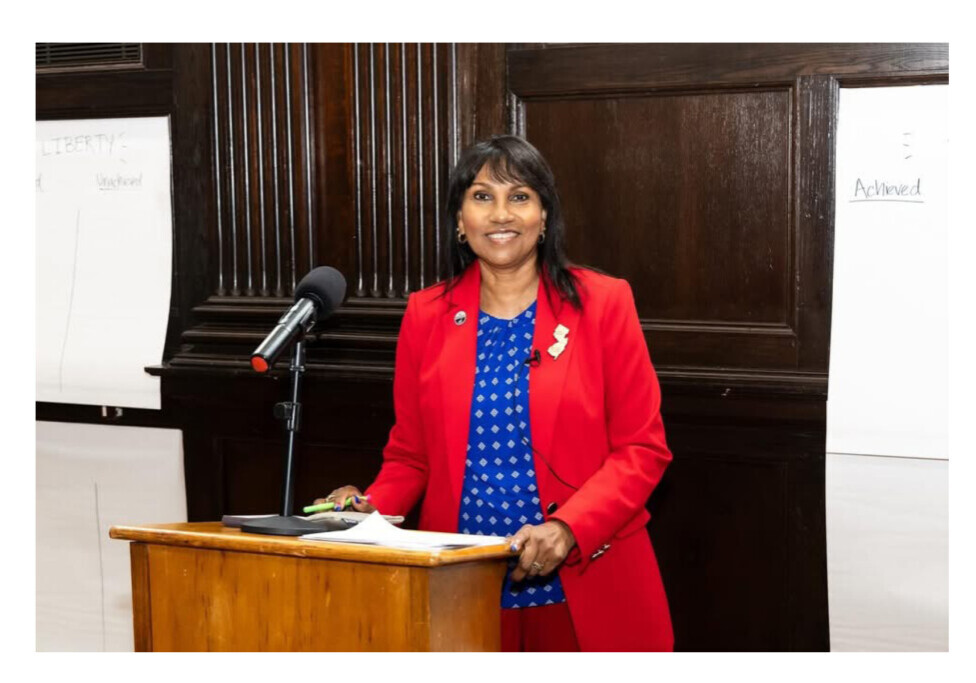
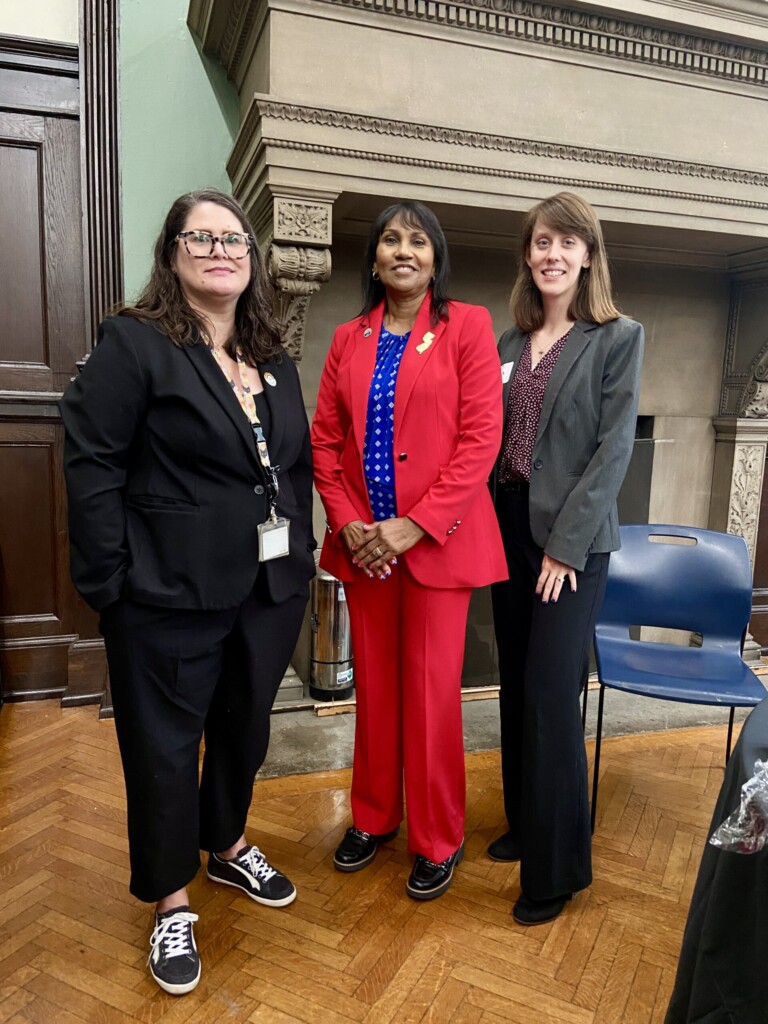
The 2025-26 school year, my 44th as an educator, started with a collaboration with the NJDOE’s Revolutionary Schools project, RevolutionNJ, Assistant Commissioner Jorden Schiff, Pete Mazzagatti, Tami Strege and the amazing Joe Nappi, who is the 2024 NJ State Teacher of the Year. Together, we created half-day workshop sessions for high school students commemorating the 250th anniversary of the American Revolution.
Students were guided through an analysis of the Revolutionary era using primary sources, connecting the past to the present and identifying how they could be change makers or active participants in the Living Revolution. This event was held at the Newark Public Library on Sept. 17, national Constitution Day, and included a behind the scenes preview of Ken Burns’s new series, “The American Revolution.” Nappi and I were honored to have New Jersey Commissioner of Education Kevin Dehmer, Lieutenant Governor Tahesha Way and Ken Burns speak to the students in our sessions.
The 250th anniversary of the American Revolution is giving New Jersey educators a rare chance to teach the founding era not as distant mythology, but as a living set of promises that students can interrogate, question and extend.
As a participant in the NJDOE’S Revolutionary Schools project and a partner with RevolutionNJ, our classroom work now aims to center diverse Revolutionary voices, connect 18th century ideals to 21st century struggles and invite students to define their own role in the never-ending journey of American democracy.
Revolutionary Schools and RevolutionNJ
RevolutionNJ is the statewide partnership between the New Jersey Historical Commission and Crossroads of the American Revolution. They are charged with planning New Jersey’s commemoration of the 250th anniversary of the American Revolution. The Revolutionary Schools program, created by the NJDOE in collaboration with RevolutionNJ, recognizes schools that commemorate the 250th through exemplary social studies instruction, civic engagement and local history research.
Within this framework, classroom projects are designed to help students see New Jersey as the “Crossroads of the American Revolution,” not only in terms of battles and generals but through the daily lives and choices of 18th century New Jerseyans. RevolutionNJ’s interpretive framework explicitly calls on educators to tell a more diverse, inclusive story and to show how Revolutionary events, ideas and ideals continue to shape contemporary debates over democracy and justice.
Centering revolutionary ideals
Much of this work is anchored in five interconnected Revolutionary ideals: liberty, equality, justice under law, representation/democracy and tolerance. Students begin by brainstorming definitions of “revolution” and then mapping their own ideas—change, resistance, power, voice—onto these founding principles. This opening invites them to ask not just what changed in 1776, but whose lives were transformed, whose were left out and who is still waiting for promises to be fulfilled.
The ideals become analytic lenses guiding every subsequent activity. Students examine the tension between universal language such as “all men are created equal” and the realities of slavery, gender hierarchy and Native dispossession. In addition, students track how people on the margins claimed Revolutionary language for themselves. At the same time, students connect these ideals to contemporary movements for voting rights, criminal justice reform, LGBTQ+ equality and immigration justice, echoing President Barack Obama’s reminder in his Second Inaugural Address that the truths of the Declaration of Independence are “self-evident, but never self-executing.”
Voices of the Revolution: gallery walk
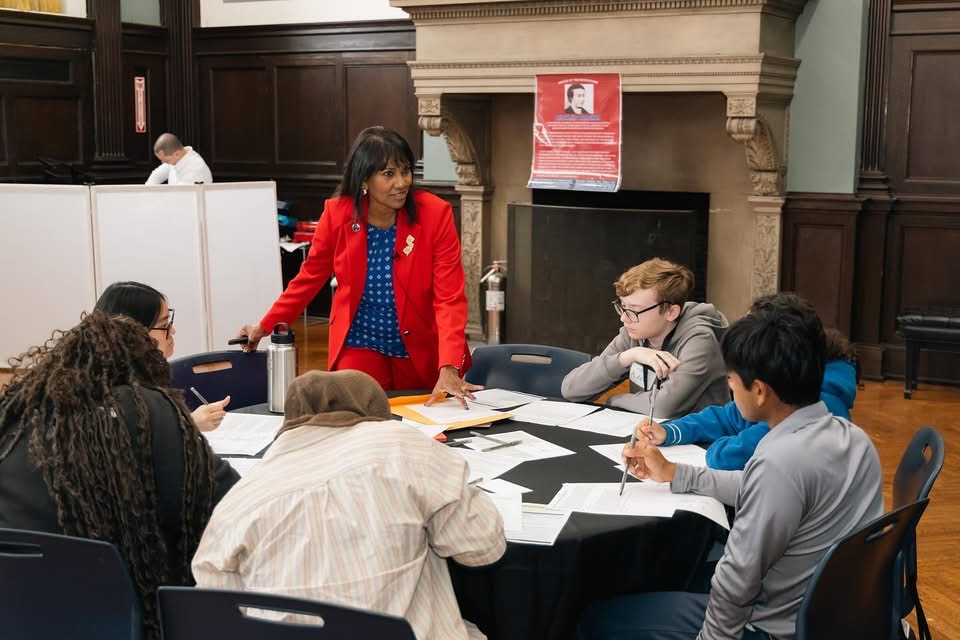
The centerpiece of the Sept. 17 Newark Public Library workshop for high school students was a “Voices of the Revolution” gallery walk, structured around those core ideals. The room became an immersive primary source lab, with each station highlighting a different figure—Patriot, Loyalist, woman, Black New Jerseyan, Native leader, artisan, soldier—and linking their words and actions to liberty, equality, justice, representation or tolerance.
Students circulated in small groups, annotating excerpts, images and short biographies, and responding to prompts such as: Who is included in this person’s vision of “the people”? Which ideal did they fight to expand, and at what cost? How do their experiences complicate textbook narratives about the Revolution? This structure encouraged mixed ability scholars to engage at different entry points—close reading for some, big picture synthesis for others—while keeping the focus on interpretation rather than recall.
Later, in my own high school classes, the culminating task asked students to write an essay comparing and contrasting two figures from the gallery who made a strong impression. They analyzed how each expressed one or more Revolutionary ideals through words or actions, then concluded by connecting those lessons to 2025, asking: How might each figure’s vision still matter today? What can people now learn from placing their stories side by side? This format pushed students beyond hero worship toward historical argument, inviting them to see ideological conflict, moral ambiguity and unfinished work as central to the Revolutionary story.
A Living Revolution in the classroom
RevolutionNJ’s own language emphasizes that the commemoration is “about much more than the American Revolution” and is fundamentally about the democracy that emerged from it. That framing has shaped classroom practice: the Revolution is taught not as a closed chapter, but as a conversation that continues.
A key activity, “The Living Revolution,” asks students to reflect explicitly on their own role in this ongoing project. After the gallery walk and essay, students choose the ideal that most resonates with them and answer: What will my role be in the ongoing American Revolution? What specific actions can I take to advance that ideal today? Working with partners, they draft concrete commitments: facilitating a voter registration drive for eligible high school seniors, designing a mini exhibit on overlooked local Revolutionary figures, or organizing a schoolwide teach-in on civil liberties. These steps reframe the 250th as an opportunity for civic practice, not just historical commemoration.
How well have we lived up to our ideals?
The 250th anniversary naturally raises evaluative questions: Which Revolutionary ideals have we moved closer to achieving, and which remain unfulfilled? Crossroads of the American Revolution encourages educators to use New Jersey case studies—Black soldiers seeking pensions, enslaved people petitioning for freedom, women managing farms and businesses, Loyalist exiles—to show that debates over liberty and justice were present from the beginning. These stories help students see that even in the 1770s, Americans argued fiercely over what equality and representation should look like.
In classroom discussions and writing, students often conclude that the United States has made substantial progress on ideals like representation and formal equality under law—especially through constitutional amendments, expanded suffrage and civil rights legislation—while also recognizing that persistent racial, economic and gender inequities reveal the limits of that progress. Many identify tolerance and substantive equality as the least realized ideals, pointing to contemporary polarization, hate violence and structural disparities as evidence that the founding promises have not yet been fully extended to all communities. These conversations can be uncomfortable, but they align directly with RevolutionNJ’s goal of elevating complex history to help students respond to the present and prepare for the future.
Resources NJ educators can use
One practical benefit of participating in the Revolutionary Schools initiative has been exposure to a rich ecosystem of resources that New Jersey educators can bring into their own classrooms. Crossroads of the American Revolution maintains classroom resources that help teachers integrate stories of 18th century New Jerseyans into vocabulary, geography and writing curricula, along with downloadable videos, activity guides and connections to field trips and living history programs across the state. Sites such as the Old Barracks Museum in Trenton, Liberty Hall in Union and other partner institutions offer both in-person and virtual programs that allow students to role-play Revolutionary era New Jerseyans and wrestle with loyalty, liberty and survival.
National partners like the National Constitution Center and the Museum of the American Revolution provide free lesson plans, timelines and thematic units that connect the Declaration’s language to later struggles including Seneca Falls, Selma and Stonewall. New Jersey educators can adapt these materials to spotlight local sites and communities, reinforcing that the fight to define American freedom has always been both national and deeply local.
Looking toward 2026 and beyond
The approach of July 4, 2026, is driving a wave of community-based projects that invite schools to collaborate with libraries, museums and historical societies. The Revolutionary Schools initiative explicitly encourages educators to share information about these local and statewide events and to connect them to classroom inquiry, turning field trips and public programs into catalysts for deeper student research and civic engagement.
For educators, the question is not whether to mark the 250th, but how: Will this anniversary reinforce a narrow, triumphalist narrative, or will it help students grapple honestly with contradictions between ideals and reality and imagine how to close that gap? RevolutionNJ offers a model rooted in inclusive storytelling, critical thinking and active citizenship, urging teachers and students alike to see themselves as stewards of a fragile, unfinished democratic experiment. In that sense, every lesson on liberty, equality, justice, representation and tolerance becomes an invitation – not just to learn about the past, but to decide what the next chapter of the American Revolution will look like, and who will be fully included in it.
Theresa Maughan is a social studies teacher at East Orange STEM Academy in East Orange. She was the 2021-22 NJ State Teacher of the Year and the recipient of the 2023 Horace Mann Award for Teaching Excellence. She may be reached at maughantheresa@gmail.com.
Bring the American Revolution to life with your students:
Crossroads of the American Revolution