

By Marybeth Beichert
NJEA members across the state bring their skills, dedication and expertise to school districts every day. They advocate for their students and public education, volunteer their time, and work with parents to ensure that every student has the resources and opportunities needed for success.
However, decisions that impact education, students and the education profession are made by elected officials at the state and local level with little to no input from NJEA members.
From classrooms to campaign trails
Educator voices matter and this past November, NJEA members used theirs when they volunteered for Mikie Sherrill’s campaign, interviewed and endorsed candidates for their local school board or municipal government, and some made the commitment to run for office themselves.
In this past election, NJEA members volunteered throughout the state to elect candidates who shared their values, and their efforts paid off. In fact:
- 59 of 67 NJEA PAC-endorsed candidates for state Assembly (and one Senate seat) won their election.
- 171 of 232 NJEA members running for office were successful in their race.
- 42 of 57 endorsed candidates won at the local level.
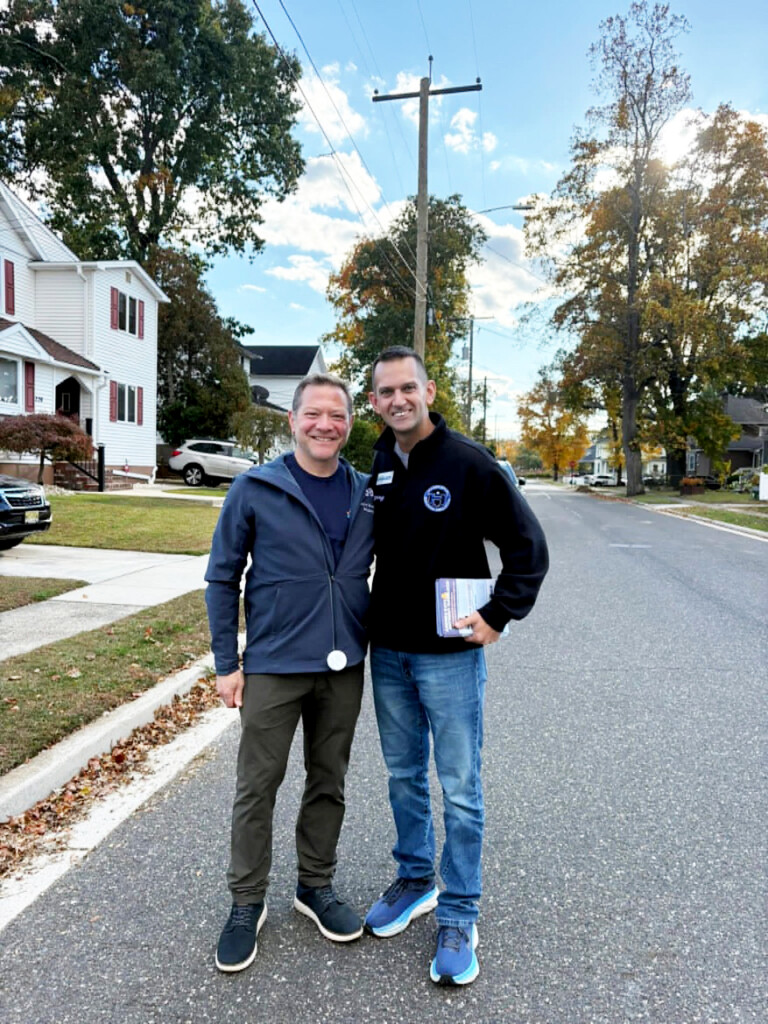
Mr. Angelozzi goes to Trenton
One of the most closely watched races in the state was the race for Assembly in Legislative District 8 (LD 8) by NJEA member Anthony Angelozzi. Angelozzi, who was endorsed by NJEA members, is an 18-year history teacher from Atlantic County, president of the Hammonton Education Association and a UniServ Consultant. This was his second run for assembly and his first win in a district that was represented by a Republican for 50 years. He knew it was going to be a tough race, but he had spent 10 years behind the scenes volunteering with the Atlantic County Democratic party helping to coach and educate candidates on education policy, fundraise, phone bank and canvass. In his first run for Assembly, he knocked on 6,600 doors. His hard work and values helped to earn him NJEA’s endorsement.
During this election cycle, he knocked on over 8,600 doors, sharing one-to-one conversations with potential voters about work experiences, his knowledge of state politics and other kitchen table issues that impact families like his every day.
Angelozzi believes in leading by example, and when volunteers—many of them fellow NJEA members—saw that he had spent most of the year canvassing five to six days a week they wanted to be part of his campaign. Angelozzi believes his role as a public educator and union member brings a unique perspective to his new role as a state representative. “I plan to work with all stakeholders to address affordability issues, school funding and the importance of strengthening unions,” Angelozzi said.
Local involvement can make the difference
The November election saw an increase in local association political involvement. And that is a good thing considering the power elected officials have in decision making. Many local associations across the state used their influence to help elect school board members and pass referendums that will have a direct impact on students.
Unlike an endorsement of candidates at the state and federal levels, the decision by an association to engage in local politics is strictly made by the local association members. The governing body of the association decides if they want to screen candidates, set the guidelines of the process and include the decision in the minutes of a representative council or general membership meeting. Locals work with their UniServ field representative or Government Relations member organizer for guidance on procedures to make sure the decision reflects the values of the association.
Hopewell Valley pushes for safe schools
For John Grimaldi, president of the Hopewell Valley Education Association (HVEA), the decision to support a district bond referendum came down to ensuring that students and staff had a safe and healthy environment conducive to learning.
The referendum included repairing and renovating roofing, HVAC systems and student bathrooms as well as additional classrooms at two elementary schools. For years, students at the elementary school had been taught in outdated classrooms and trailers that were over 30 years old. With the help of NJEA staff, HVEA sent out targeted communications to all NJEA members who lived in the district asking for their support. Collaboration with the superintendent and the public support of the referendum from HVEA helped with its passage.
“Taking an active role in local politics is critical for delivering value to one’s membership,” Grimaldi said. “It can sometimes be messy, but local politics affects working conditions within a district, and every local needs to take that into account when developing a strategic plan with their executive teams.”
North Brunswick navigates endorsement challenges
The North Brunswick Township Education Association (NBTEA) has been endorsing school board candidates for the last few years. Beth Passner, president of NBTEA, agreed that while endorsing candidates can reap benefits, especially when the endorsed candidates win, “It is not without its risks or challenges.”
Passner recalled the first time the local made an endorsement. “There were many in the community who did not understand why we were endorsing candidates when we had never done so before. We simply responded, “Who is better to make recommendations for the local board of education than the professionals who work in the school and see the daily challenges our schools face?”
Because of their organizing efforts on behalf of their endorsed candidates, NBTEA saw two of their three candidates win their seats in November.
Grassroots organizing powers statewide wins
This past election for governor was critical for NJEA members and public education, and members stood up for their values. Their volunteerism included 92 phone-banks that resulted in more than 50,000 phone calls, 30 canvasses statewide and more than 30,000 text messages to fellow NJEA members about the importance of the election.
There is no doubt that NJEA organizing helped NJEA PAC-endorsed candidates across the finish line. In light of the federal government’s decision to dismantle the U.S. Department of Education, it will be more important than ever to have a governor and state and local representatives who stand up for public education and the value that it brings to New Jersey families.
Marybeth Beichert is an associate director in the NJEA Communications Division.