
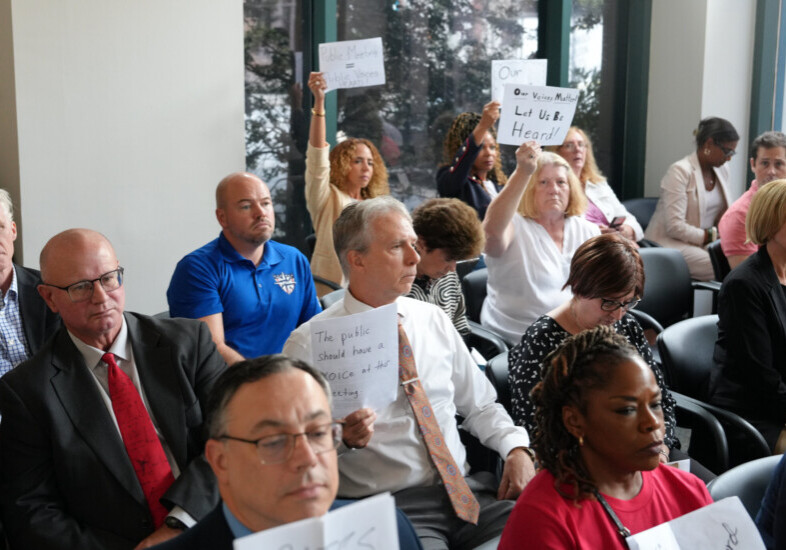
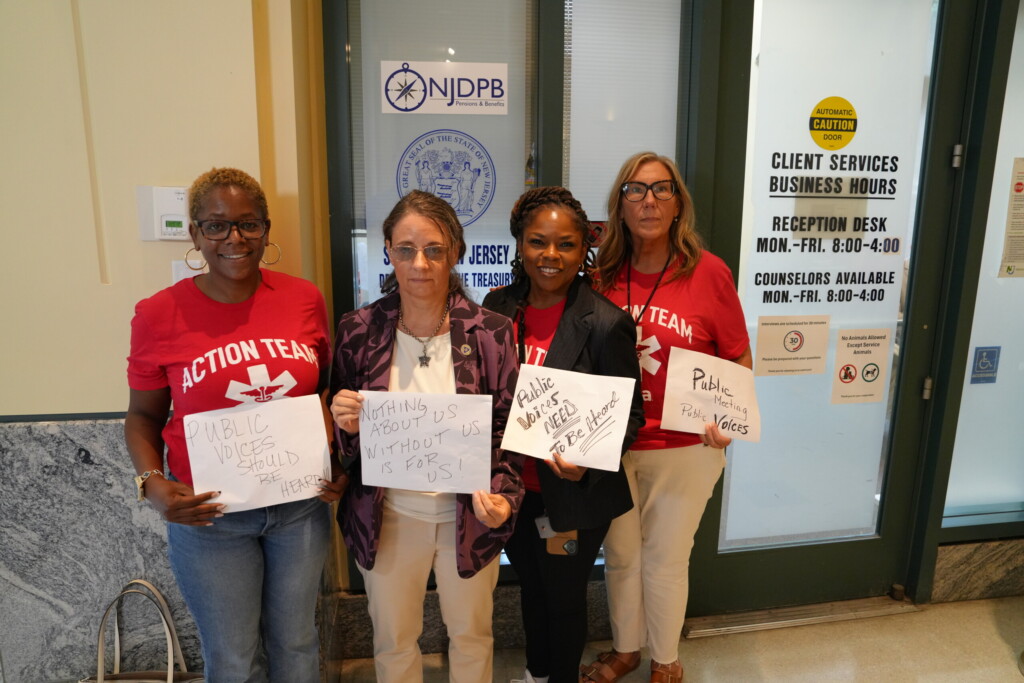
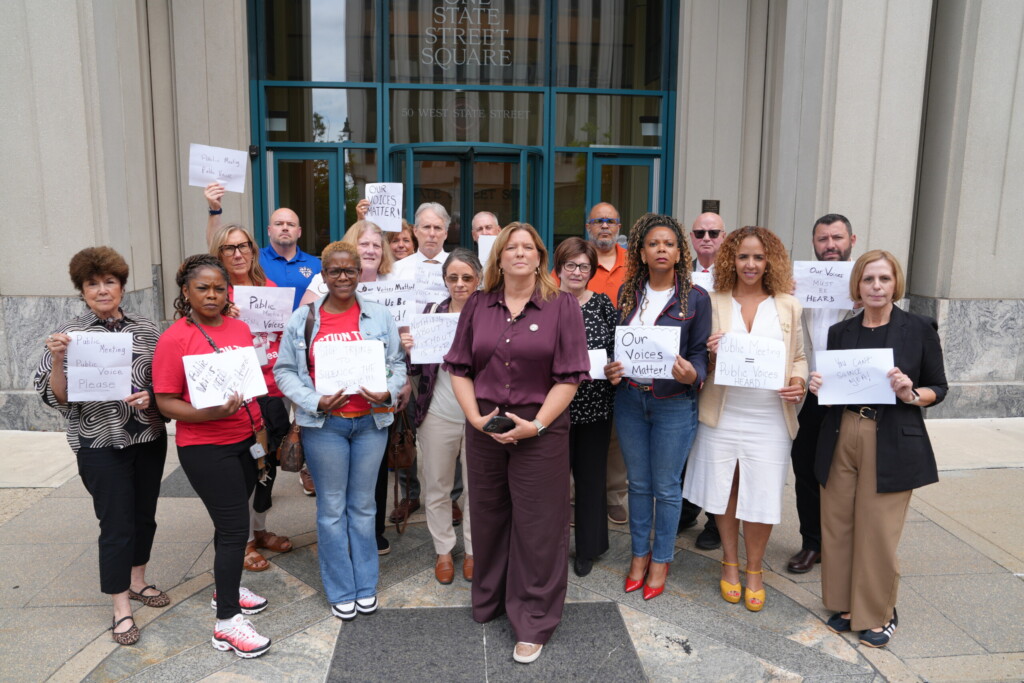
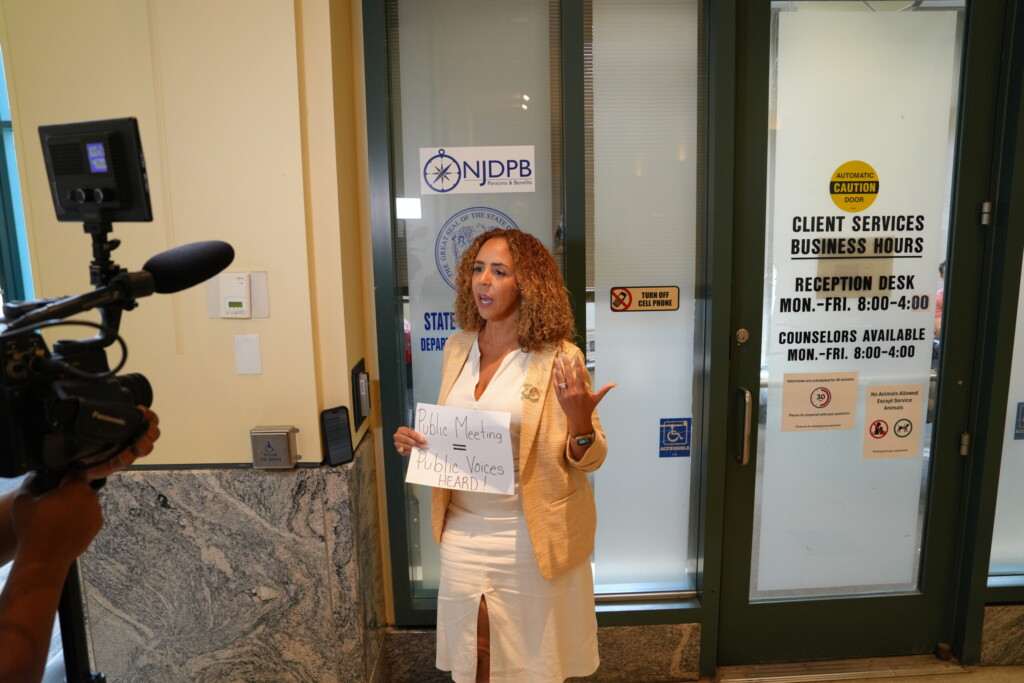
The School Employees’ Health Benefits Commission (SEHBC) today deadlocked for the third consecutive meeting on a proposed 34 percent health insurance rate increase for participating school districts, with all four labor representatives refusing to approve the extreme increase. Earlier in the meeting, management representatives blocked public comment from educators, school employees, taxpayers and other stakeholders seeking to address the proposed increase. Labor representatives also proposed three resolutions aimed at reducing costs, increasing accountability and providing relief to school districts, but all three were rejected on 4-4 votes, with management representatives voting no.
Following the meeting, NJEA President Steve Beatty, Vice President Petal Robertson and Secretary-Treasurer Tina Dare released the following statement:
“We are outraged that the management representatives on the School Employees’ Health Benefits Commission voted to silence the voices of the public at today’s meeting. The same four commissioners who want to push through the egregious 34 percent rate increase are unwilling to hear from people who would be directly affected by that decision. That is not government by the people and for the people and we will not stand for it. The Department of Treasury has repeatedly refused our invitations to meet and discuss options for meaningful savings. The department has also ignored resolutions passed by the Commission demanding real efforts to find those savings.
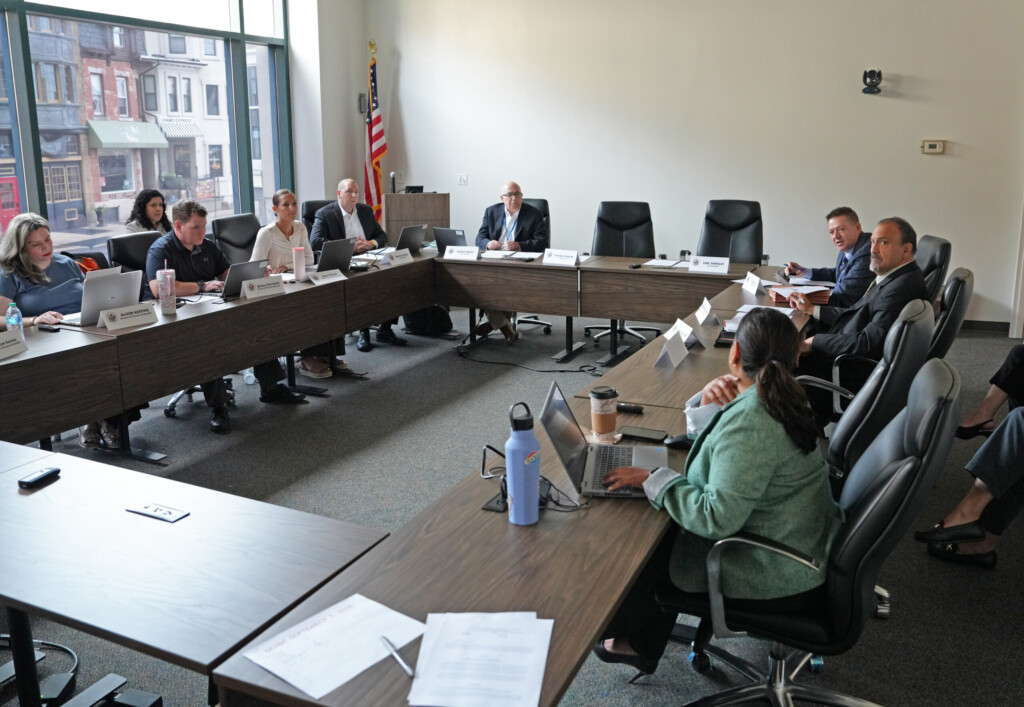
“Once again, labor representatives on the SEHBC came to the meeting in good faith, seeking solutions. They proposed an independent review of how the program is being managed, a comprehensive evaluation of claims administration and other opportunities to improve efficiency and reduce costs, and immediate financial relief for school districts facing extraordinary rate increases.
“These are serious, practical proposals aimed at finding savings, increasing accountability and protecting students, educators and taxpayers from the consequences of a broken system. Yet the same four commissioners who refused to hear from the public also rejected these commonsense measures, continuing a troubling pattern of dismissing efforts to identify real savings while expecting school districts to absorb another devastating increase.
“As a result of that failure to act, for the third consecutive meeting, the proposed rates failed. Labor representatives refuse to rubber-stamp a 34 percent increase without first exhausting every opportunity to identify meaningful savings and cost-containment measures. That is exactly what the Commission should be doing on behalf of the school employees, school districts and taxpayers who fund and depend on this program.
“The consequences of failure to work with us to reduce those rates are real and devastating. Every dollar diverted to unnecessary health insurance costs is a dollar that cannot be invested in students, educators and educational opportunities. New Jersey has a constitutional obligation to provide every child with a thorough and efficient education, and rate increases of this magnitude make that responsibility harder for school districts to fulfill. When districts are forced to absorb massive and avoidable cost increases, students inevitably pay the price through greater financial pressure on the programs, services and resources that support their education.
“Our responsibility is to ensure that every reasonable opportunity to reduce costs has been fully explored before school districts, school employees and taxpayers are asked to bear increases of this magnitude. We will continue to press for meaningful savings, practical reforms and real solutions to reduce these destructive rate increases. Our members, our students and New Jersey taxpayers deserve better, and we will not stop fighting until they get it.”
The SEHBC is comprised of eight voting members, split evenly between labor and management representatives. Because commission action requires five affirmative votes, a 4-4 deadlock prevents adoption of proposed rates, resolutions and other measures before the body.
Related
New Jersey’s Growing Health Insurance Crisis
TAKE ACTION: The time to fix healthcare for NJ educators is now