
By Dorothy Wigmore
The sounds of socializing
Since early February, things have been different in Linda Kramer’s school.
“The students are even more engaged as they walk through the hallways,” she says. “They’re actually talking to each other and laughing. But I don’t mind that so much, because it’s nice. It’s good to see them interact.”
The change is coming to all New Jersey schools by next fall, although some districts already have made the transition.
Statewide ban on cellphones in schools
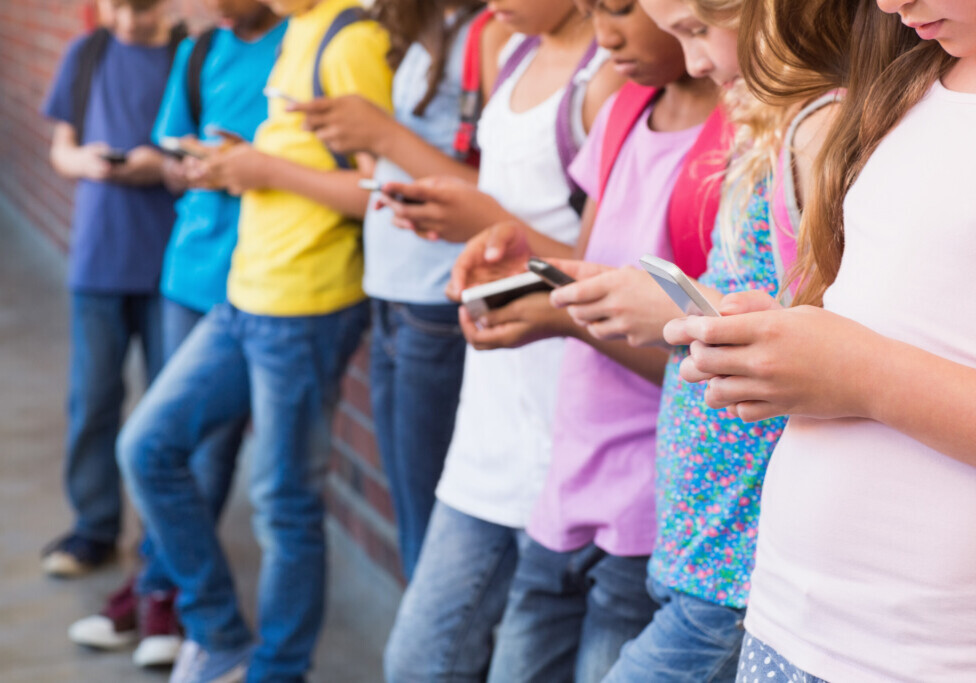
What’s happening? A state ban on internet-enabled devices during instructional times, or better, the entire school day, with a few exceptions. This includes smartphones, tablets, smartwatches and glasses, earbuds and wireless headphones, but not school-provided devices such as laptops. Rules vary depending on the grade level. Similar bans are in effect in many other districts.
“The teaching staff were really worried about how the kids were going to react to it and how much pushback we would get from parents,” Kramer said. Kramer is a long-time high school instructional assistant and vice-president of her local education association. “I think we were successful because we let everyone know ahead of time this was what was going to happen.”
Following legislation that former Governor Phil Murphy signed on January 8, districts now must have policies restricting the use of the devices. New Jersey Department of Education guidelines say the goal is “to promote student well-being, academic engagement and digital safety.”
The process is pretty simple, Kramer says. If students have a device, they bring it to their homeroom, shut it off and put it in the pouch. After applying a magnetic lock, the teacher returns the pouch. At the end of the day, students return to their homeroom, staff unlock the pouch and return the phone. It’s like the magnetic security tag used in stores.
The benefits are clear
Student mental health issues are the biggest concern behind the move, with emphasis on social media’s effects. Jonathan Haidt, a New York University social psychologist and author of the influential The Anxious Generation, argues that society needs to treat social media platforms as addictive and harmful for young people. He describes four foundational harms: social and sleep deprivation, attention fragmentation and addiction as phones become “experience blockers,” especially blocking relationships.
In an interview, Haidt told “The New Yorker Radio Hour” about Australia’s recent ban on those under 16 years of age using social media. Where phone-free school policies are done reasonably well, “the results are always spectacular,” with laughter in the halls again and loud lunchrooms, he said. The best results apparently come from putting phones in special lockers for the day, followed by using locked pouches. Student backpacks are the least effective.
Educational staff benefit too. Preliminary results from a multi-year study found that almost all teachers surveyed said cellphone bans helped them manage their classrooms and build stronger connections with students. In the study, 85% of teachers said the ban improved their well-being. They felt less stressed and more supported. Almost as many reported their job is more rewarding.
“I would totally agree it’s less stressful, because we don’t have to stop the instructional process and ask someone to put a phone away, or even have an argument with a child who was unwilling to put their phone away,” Kramer says.
Health and safety impact
What the new state law doesn’t mention is the other serious harm from wireless devices.
They rely on radio frequency radiation (RFR), lower-energy non-ionizing radiation. Increasingly these days, it is transmitted by mobile phones, base stations, Wi-Fi enabled-routers and computers, security systems, fitness watches, baby monitors and wearable tech.
At Kramer’s school, and many others, that leaves students still exposed to RFR from laptops using Wi-Fi and the routers behind it.
According to a 2024 report on the risks of non-ionizing RFR, author Tom Butler wrote, “The weight of scientific evidence consistently finds risks to human health. These risks are magnified where children are concerned.” Children and young people are particularly susceptible to harm, given their growing bodies and brains.
“Today, we are with RFR from wireless devices where we were with asbestos and tobacco in the 1970s,” the report’s authors said. Citing a culture of industry, academic and regulatory delay, denial and collusion and unrealistic test protocols, they show current RFR thermal-only standards “are completely inadequate” to protect people and the environment from long-term harm.
The harm includes brain and salivary gland cancers, cognitive processing effects, sleep disturbance, depression, Alzheimer’s disease, ADHD, lowered sperm count, immune dysfunction, heart damage and more.
The authors called for authorities to use the precautionary principle and take action to prevent harm without waiting for more evidence to reduce exposures. They point out that software and hardware modifications, especially around antennae, could reduce exposures.
Others offer tips including:
- Keep a distance between your body and the device when it is powered on.
- Use the speakerphone or wired headset for phones and wired connections for laptops.
- Ensure you have a good signal to avoid increased radiation from poor ones.
- Turn off wireless devices at night and use airplane mode when not in use.
What should health and safety committees do?
- Learn about RFR hazards and educate members, providing tips to reduce exposure.
- Investigate the use of devices using RFR in your school, arguing for a precautionary approach aimed at reducing exposure as much as possible and promoting the use of wired internet connections.
- Support members dealing with the new ban and evaluate its effects.