
By Kristy Ranieri
Across New Jersey, sustainability is taking root in classrooms, schoolyards, cafeterias and communities thanks to educators with the vision and support to bring their ideas to life.
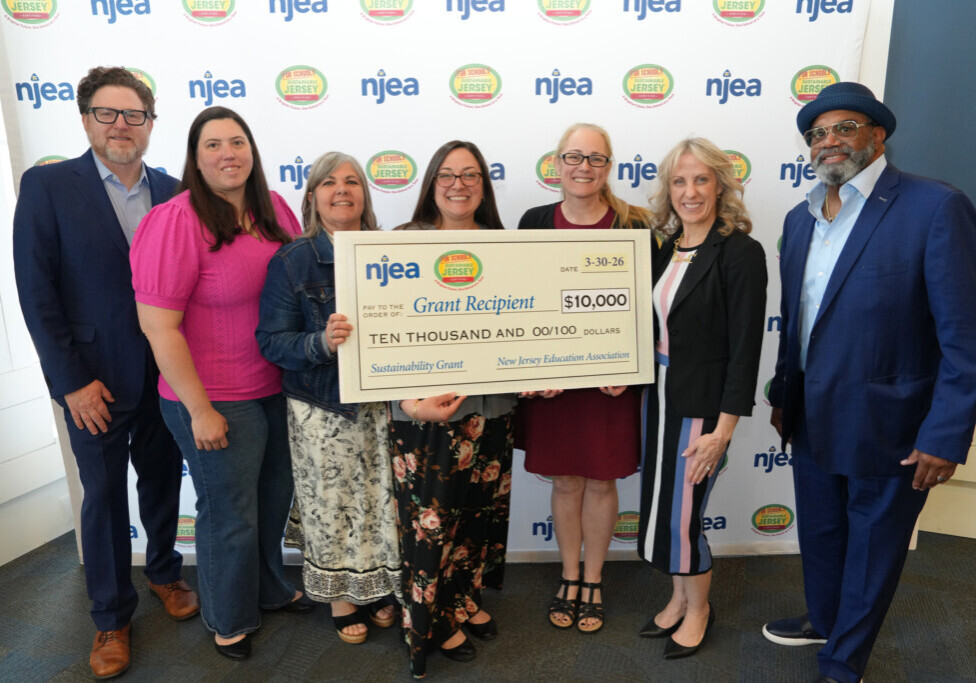
In March, Sustainable Jersey for Schools awarded $180,000 in grants to 38 public schools and districts. Funded by NJEA, the awards included 13 grants for $10,000 each and 25 grants for $2,000 each, fueling initiatives ranging from outdoor learning spaces and school gardens to food waste reduction, energy conservation, STEM education and student wellness.
The grants reflect schools’ growing commitment to sustainability, not as an extra initiative, but as an essential part of preparing students for the future.
“As educators, these grant recipients are helping create a safer, healthier and fairer world for future generations,” said NJEA President Steve Beatty. “By giving students the opportunity to take an active role in positive change, they are empowering future sustainability leaders whose impact will be felt for years to come.”
One project that illustrates this impact is the Eagle’s Nest Garden at Round Valley School in the Clinton Township School District, which received a $10,000 grant to expand its outdoor learning space. For educators Caroline Mann, Green Team coordinator and Hunterdon County Teacher of the Year, Ronda Ferri, dean of students and food waste reduction coordinator and Jen Desjadon, garden coordinator and the driving force behind the project’s vision and implementation, the garden began as what Ferri described as “an accidental moment that we turned into a movement.” What started as a shared passion for sustainability has grown into a transformative, school-wide initiative.
The team first received a $2,000 NJEA-funded Sustainable Jersey for Schools grant in 2024, which helped launch the vision. That initial funding supported site preparation, including the innovative use of goats to clear invasive plants, as well as the installation of a composter and foundational garden space.
Now, the new grant will transform the area into a fully developed outdoor classroom connected to the school’s food waste reduction efforts and science curriculum. Planned additions include raised beds, a pollinator garden, rain barrels, solar-powered drip irrigation and outdoor seating.
Students are central to every phase of the project. The Student Garden Club, which brings together general and special education students, will help lead planning, planting and maintenance. A schoolwide winter sowing initiative will engage students in growing native plants, while a design challenge will invite students to create a sustainable rainwater collection system.
“The Eagle’s Nest Garden creates an accessible outdoor classroom where every student can engage in meaningful environmental education,” said Mann. “It transforms concepts like biodiversity, water conservation and sustainable food systems into hands-on learning experiences.” The project’s success is also rooted in strong community partnerships, with support from the township green team, local scouting organizations and local businesses.
Through Sustainable Jersey for Schools, NJEA’s support is helping improve school environments while empowering educators and students to become leaders in sustainability. Across the state, these grants are creating pathways to stronger schools, healthier communities and a more resilient future for New Jersey’s students.
Kristy Ranieri is a communications consultant with Sustainable Jersey for Schools. She can be reached at kristyranieri@gmail.com.