
By Kristy Ranieri
What is the magic formula to inspire schools to take action on sustainability?
For the past decade, Sustainable Jersey for Schools has been working to answer that question. The program offers schools a roadmap through its certification process, coupled with training and technical assistance, to support steady, measurable steps on the path to sustainability. Yet while expertise and guidance are critical, many educators and administrators say one catalyst makes all the difference: seed funding to start small.
Even modest grants give schools permission to test ideas—whether planting a school garden, launching an energy-efficiency project or piloting a recycling program. These visible, hands-on efforts generate excitement among students and staff. Early success creates momentum and often sparks partnerships that help schools leverage additional resources for bigger initiatives. In this way, a grant does much more than fund a project—it sets off a ripple effect that can transform a school’s culture and inspire a long-term commitment to sustainability.
At the heart of this movement is the NJEA. As a founding partner of Sustainable Jersey for Schools, NJEA has provided leadership and financial support that has allowed the program to thrive. Since 2015, the Sustainable Jersey Grants Program has distributed more than $3.6 million to fund over 800 sustainability projects in public schools. Of that, $2.75 million has come directly from NJEA to support both grants and the certification process itself. More than half of participating districts have received at least one Sustainable Jersey grant.
These investments reflect NJEA’s core priorities: safe and healthy learning environments; the social, emotional and physical well-being of students; and strengthening public education through innovation. NJEA’s decade of support for diverse projects, from food waste solutions and outdoor classrooms to mindfulness spaces and arts programs, has nurtured a culture of sustainability that links student learning with community well-being.
To see the results, you don’t need to look far. The stories of two very different districts—Delran Township School District, a small suburban community, and Jersey City Public Schools, one of the largest and most diverse districts in the state—demonstrate how long-term investment in sustainability can change outcomes for students and communities alike.
Delran Township school district: Grants cultivate a culture of sustainability
At Millbridge Elementary School in Delran, a simple stormwater problem became the seed of a much bigger story. For years, rainwater pouring off the school roof would pool and flood the blacktop, leaving the playground muddy and unusable. Students were often stuck indoors.
In 2015, with a $10,000 Sustainable Jersey grant funded by NJEA, Millbridge Elementary School created a 10,000-gallon rain garden to reduce the flooding. More than 800 students planted 1,900 native plants alongside the PTA, Rutgers Cooperative Extension, Burlington County Master Gardeners and the Delran High School Horticulture classes. When the project was complete, the school celebrated with a community-wide Earth Day event featuring 30 classroom presentations by sustainability experts.
The results were immediate and measurable. Staff reported that students gained more than 20 additional days of outdoor playtime each year. Teachers observed that nearly two-thirds of students understood the purpose of the rain garden. More importantly, the project strengthened relationships across the district and with the municipal green team, laying the groundwork for ongoing collaboration.
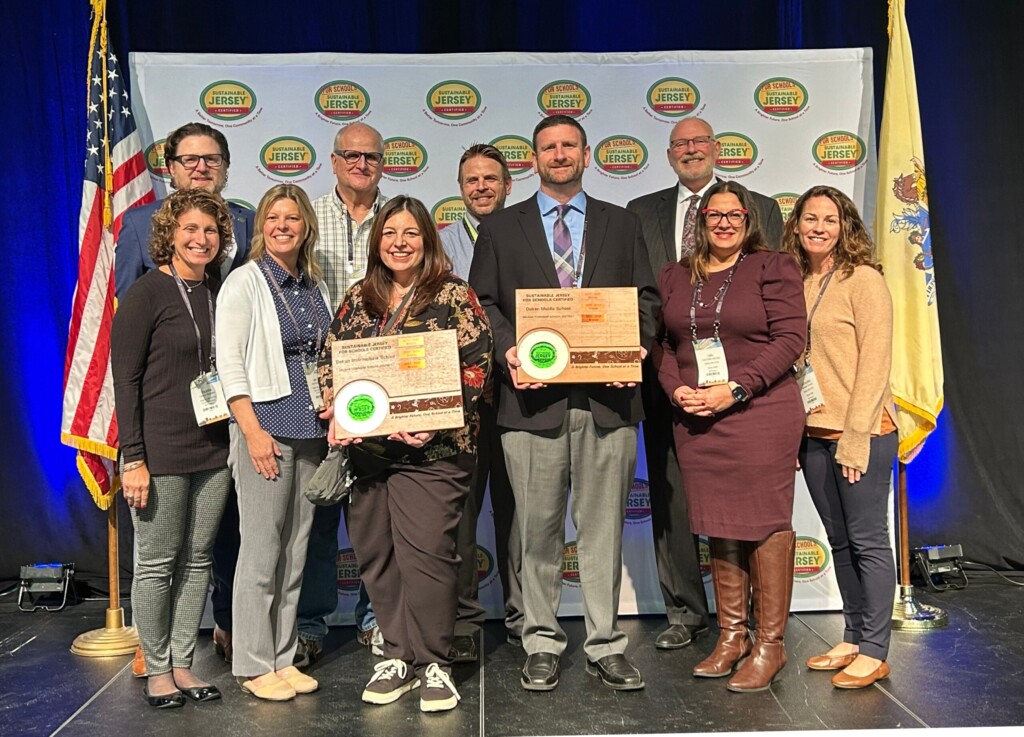
Ten years later, the rain garden still adds certification points to Millbridge Elementary School’s Sustainable Jersey application. It also stands as a symbol of how one project can promote a culture shift. In 2015, all four Delran Township schools achieved Sustainable Jersey certification— and have sustained it ever since.
Since the first rain garden, Delran Township Public Schools has secured $46,000 in Sustainable Jersey grants, $34,000 of which were funded by NJEA. The schools have used these funds to establish outdoor classrooms, expand gardens, implement water conservation projects, reduce waste and install bottle-filling stations. For a small suburban community, Delran Township Public Schools has demonstrated remarkable consistency and leadership in embedding sustainability into daily school life. The rain garden that once solved a drainage problem became the foundation of a districtwide culture of environmental stewardship.
Jersey City Public Schools: Grants grow capacity over time
On the other end of the spectrum lies Jersey City Public Schools, a district of 39 schools and four early childhood centers serving one of New Jersey’s largest and most diverse urban populations. Here, the path to sustainability looked different—longer, more incremental, but equally transformative.
In 2015, just two schools—James J. Ferris High School and Renaissance Institute High School—received the district’s first NJEA-funded Sustainable Jersey grants of $2,000 each. Ferris High School used its grant for a STEAM-focused green energy project, which later inspired a new curriculum partnership between Jersey City Public Schools and Sustainable Jersey City. Renaissance Institute launched a greenhouse and farm-to-table program that gave students hands-on experience with food systems.
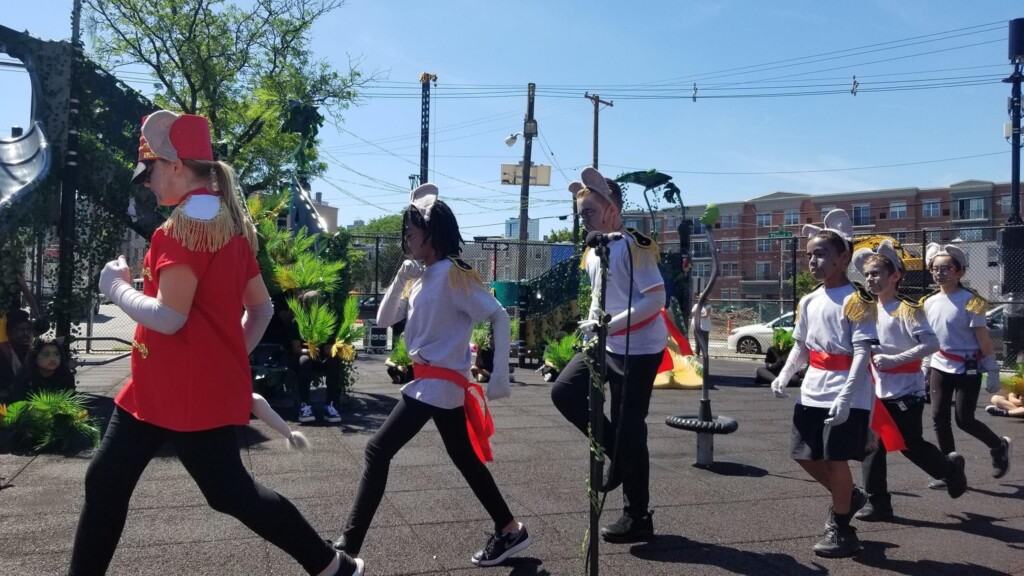
Other schools soon joined the effort. Dr. Michael Conti School No. 5 used a grant to develop hydroponic and aquaponic gardens that not only produced edible crops, but also engaged students in research on water filtration and urban gardening. Later, a $10,000 Sustainable Jersey grant funded a music theater program that expanded arts access and culminated in a 2022 performance of The Jungle Book with student-built sets and costumes. Using a grant, seventh graders launched “Do Gooders,” a program using tokens and an app to inspire and track acts of kindness while blending STEM with social-emotional learning. This grew into the Conti Kindness Initiative, uniting staff, parents and all students from Pre-K to eighth grade in lessons and activities that foster respect, empathy and a positive school culture.
Cornelia F. Bradford School No. 16 transformed an unused classroom into a mindfulness “Zen den,” where students practice yoga and meditation to de-escalate conflict and improve focus. Ezra L. Nolan Middle School No. 40 created a safe space to support student well-being. At Charles P. DeFuccio School No. 39, a $10,000 Sustainable Jersey grant helped develop the Panther Retreat, a green space and outdoor classroom designed as a calming and collaborative environment for students with autism and disabilities. “Gardening can help children with autism spectrum disorder stay relaxed and focused on a series of tasks,” said Principal Dr. Chantel Perry, “and continued engagement with their school community strengthens their sense of belonging.”
Frank R. Conwell Middle School No. 4 created a rooftop garden and renovated its atrium under the grant project “Falcons Take Over the Environment,” giving students access to fresh produce and green space in a dense urban environment. At Charles E. Trefurt School No. 8, the grant funded a rooftop garden grows chickpea plants and serves as a teaching tool about climate change. “Climate change will be one of the big issues of their adult life,” former principal Marisa Migliozzi said. “The garden is a fun, educational way to get kids thinking about solutions.”
Paul Rafalides School No. 33 used its funding to introduce students to green spaces and the impacts of climate change, while Dr. Maya Angelou School No. 20 launched “Going Green in Greenville,” a project that integrated gardening and healthy eating into the curriculum. Students grew vegetables and flowers around the school grounds and on the rooftop, with community members joining in to help establish the gardens. Jersey City Public Schools Superintendent Dr. Norma Fernandez praised the project, noting, “The project allows young learners in a brick-and-mortar area of the city to enjoy the beauty, hope and benefits of gardening.”
Over nearly a decade, these projects created a steady drumbeat of progress that built districtwide capacity. As a result, in 2024, Jersey City Public Schools was awarded a $249,000 Trees for Schools grant through Sustainable Jersey for Schools to plant 84 trees across 11 school sites. This project will help increase the tree canopy in Jersey City, lowering temperatures while also reducing carbon dioxide emissions and pollution. Jersey City Public Schools reached a milestone: all 39 schools achieved Sustainable Jersey for Schools certification. In total, the district has received $341,000 in Sustainable Jersey grants, $60,000 of which came from NJEA funding. The journey illustrates how steady, sustained investment can empower even large, high-need districts to embrace sustainability as part of their culture and identity.
A decade of progress and a foundation for the future
When Sustainable Jersey for Schools launched in 2015, the inaugural class included just 59 certified schools. Ten years later, that number has grown to 370 certified schools, with more than 1,223 schools registered to participate in the program.
NJEA’s sustained investment in projects like the rain garden in Delran Township School District and the Zen den in Jersey City Public Schools, has shaped the program’s success. The Sustainable Jersey grants and certification process not only improve school facilities and learning environments, but also help students see themselves as problem solvers and leaders in their communities.
The formula for success turns out not to be so mysterious after all. It combines vision and leadership, technical support and guidance, and—critically—the ability to take first steps with the support of small grants. As the stories of Delran Township School District and Jersey City Public Schools demonstrate, small investments lead to big change. They unlock creativity and build lasting cultures of sustainability.
Sustainable Jersey for Schools and NJEA demonstrate that sustainability is not an extra for schools, it is a pathway to stronger schools, healthier communities and a more resilient future for New Jersey’s students.
Sustainable Jersey for schools
Grants and technical assistance help schools implement sustainability projects and move toward certification. The current NJEA- funded cycle offers $180,000 in grants to public schools and districts. Applications are typically due each year in late October. Learn more at sustainablejerseyschools.com/grants.
Kristy Ranieri manages communications for Sustainable Jersey. She can be reached at info@sustainablejersey.com