
By Kathryn Coulibaly
Crystal Hines brings history alive. An ambassador with the Harriet Tubman Museum of New Jersey and a physical education and health educator in Middle Township, Hines conducts tours at the museum and reenacts Tubman’s story, enlisting volunteers from the audience to portray Tubman’s parents, spouse and others who helped her along the path to freedom.
Using minimal props and costumes, Hines transports visitors back to the early 1850s, when Tubman worked in Cape May to fund her missions to freedom.
“I used to attend Macedonia Baptist Church in Cape May,” Hines says. “They talked about getting the museum approved. On Juneteenth 2021, they opened the museum. I visited a month later and knew a lot of the history because my stepfather is a descendant of William Still, an abolitionist and author from Burlington County. He is known as the Father of the Underground Railroad. By the end of my visit, the museum’s executive director handed me a job application.”
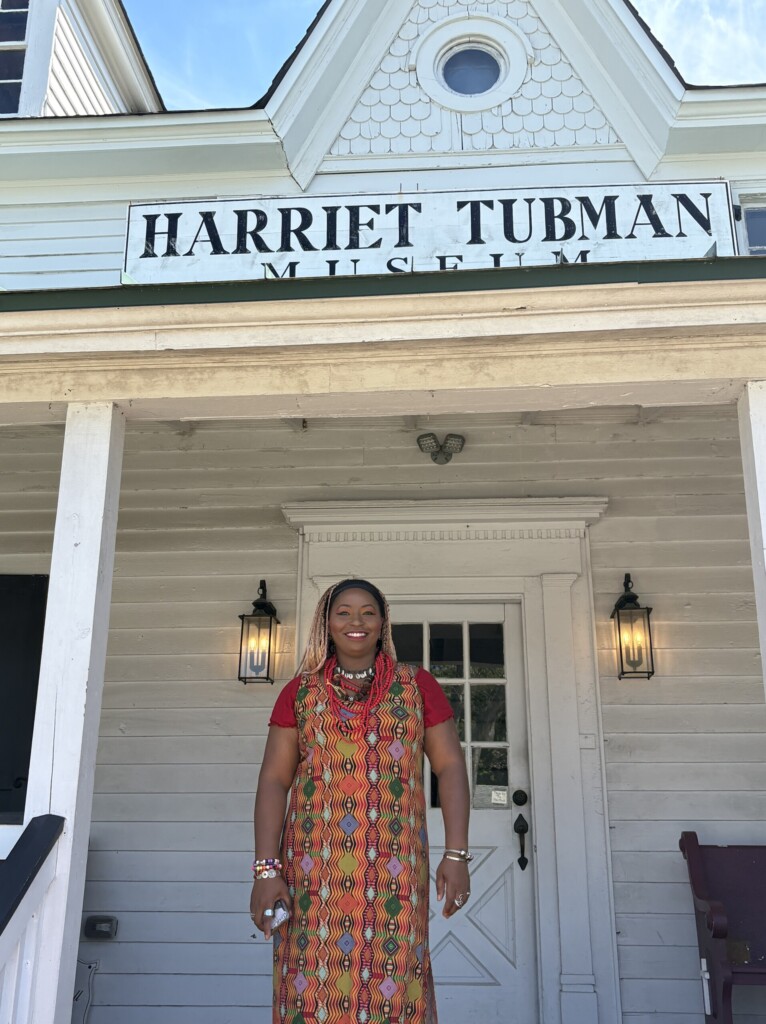
Living history in Cape May
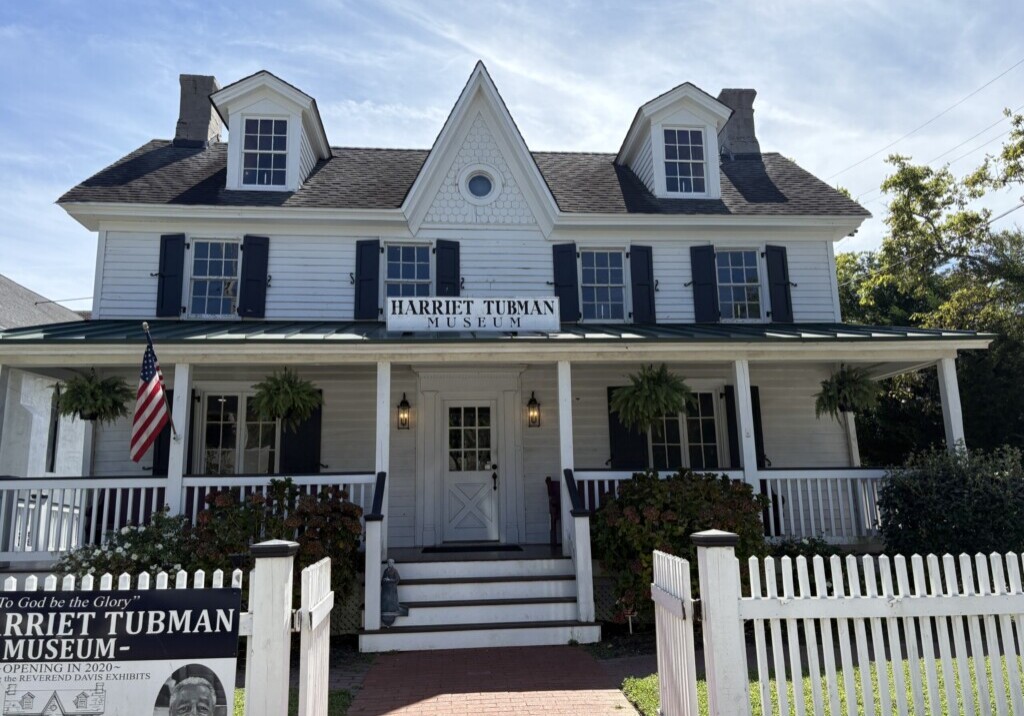
Located at 632 Lafayette St. in Cape May, the museum sits on a block that was once the center of the town’s abolitionist activity. The Stephen Smith House stands diagonally across from the museum. It was the summer home of Smith, founder of the Pennsylvania Anti-Slavery Society. Next door was the Banneker House, a hotel developed by James Harding, a friend of Smith’s, and one of the only summer resorts for free Black people in the country.
“There was a booming African American population on Lafayette Street, but due to urban renewal and gentrification, many of the properties were claimed by the city,” Hines says. “Property owners moved to West Cape May, which was very rural, or they were forced to leave Cape May altogether.”
Hines began giving tours during the summer but quickly expanded her role year-round. During the school year, she is available at the museum on Saturdays from 11 a.m. to 4 p.m. She also travels to schools, libraries, community centers and churches to share living history. Hines has performed in Pennsylvania and across New Jersey and has conducted additional research about Tubman’s life in Maryland, where Tubman—then known as Araminta Ross—grew up. She has plans to provide tours in Washington, D.C., Delaware, Maryland and New York.
Tubman’s time in Cape May
Historians say Tubman worked in Cape May between 1850 and 1852. The resort town was a meeting point for Northerners and Southerners. Abolitionists and free African Americans from Philadelphia and the East Coast traveled to Cape May by daily steamer or twice-weekly stagecoach. Southern plantation owners from Maryland and Virginia arrived by boat, often bringing enslaved people. The mix was often volatile.
One of Hines’ favorite stories to tell is Tubman’s achievements as the first female Civil War general.
“Tubman saved more than 700 people,” Hines says. “She wasn’t a typical leader, but she put in the work. She was a war hero, a general, a fugitive, a wife, an abolitionist and so much more. Her opponents could not find her, they could not stop her, and they could not beat her spirit down. That’s what makes her story so powerful.”
The work of Rev. Robert O. Davis
The museum also highlights important events and people from Cape May’s African American history. Many of the objects and art showcased were collected and donated by Rev. Robert O. Davis, former pastor of Macedonia Baptist Church, who traveled extensively in Africa.
“Rev. Davis brought people together,” Hines says. “He used his skills as an orator and singer to tell our history. He traveled, collected and shared what he learned with the people in this area. Through his efforts, he uncovered a lot of history to the advantage of Cape May.”
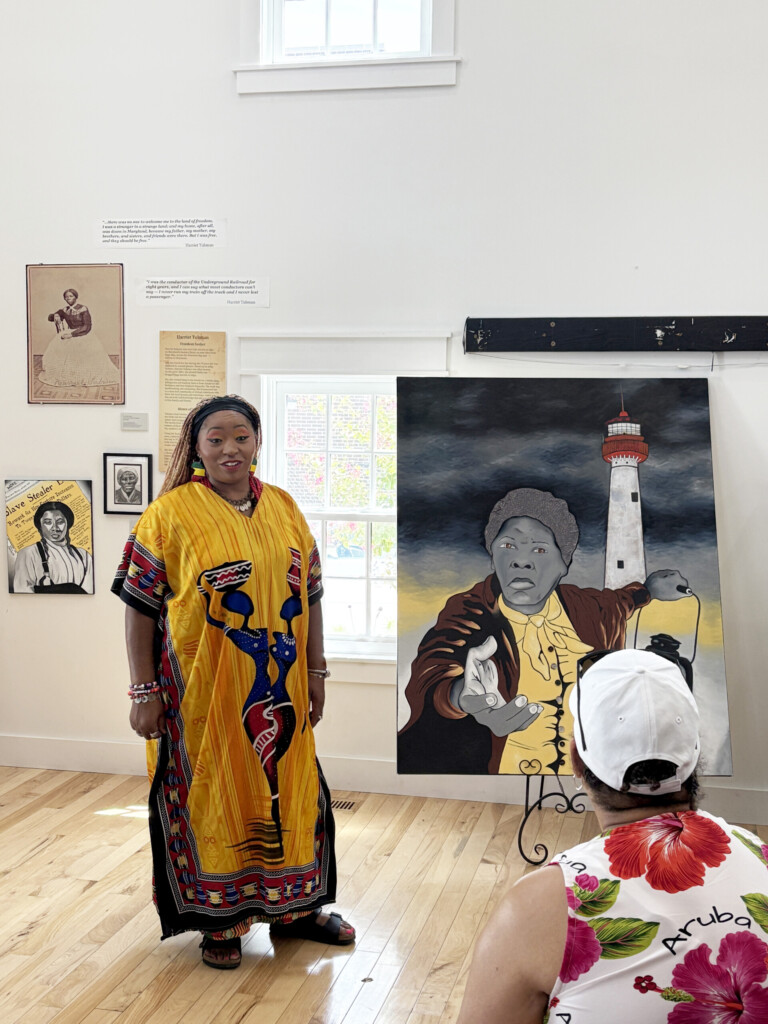
A renaissance woman
Hines sees parallels between Tubman’s history and her own. Both survived near-death experiences. At 13, Tubman was struck in the head by an iron weight thrown by an overseer, fracturing her skull. She lived with headaches, seizures, memory loss and narcolepsy for the rest of her life. Hines was hit by an 18-wheeler and dealt with major health issues similar to Tubman’s after her recovery.
“My priority as a teacher is representation,” Hines says. “My students need to see someone who looks like them and who has many varied interests and skills. I’m a physical education and health educator, a poet, a liturgical dancer, a mom, an athlete, a sports fan, a historical reenactor, and most importantly, a mom.”
“I’ve been called a ‘renaissance woman,’ and that’s true of Harriet Tubman. She was a nurse, a spy, an abolitionist, an orator and a singer. I tell my students not to put themselves into a box. Having varied interests allows me to approach my students from different angles because maybe they’re interested in some aspect of what I’m doing, too.”
Hines says helping to tell Tubman’s story has brought many different people into her life.
“I’ve met descendants of Harriet Tubman and William Still and a close friend of Malcolm X,” she says. “People from across the world have visited the museum. I appreciate everyone I’ve met as a result of this work, and I urge everyone who can to visit the museum and learn more. I have come to realize my own strength through the opportunity to tell Harriet Tubman’s story. It makes me realize how far we’ve come, and how far we have yet
to go.”
Kathryn Coulibaly is an associate ditrector in the Communications Division. She can be reached at kcoulibaly@njea.org.
Visit Cape May’s Harriet Tubman Museum
The museum is closed during January. To learn more and plan a visit, go to harriettubmanmuseum.org.